Cooking technique3 min read
Frozen vegetables can make a balanced dinner practical, but a crowded pan often turns them into a watery mixture. Managing moisture before sauce changes the texture without requiring a special diet product. The method is flexible: choose vegetables you enjoy and pair them with an appropriate protein food and grain or other satisfying base.
Read the guide ↗
Cooking technique3 min read
A tomato sauce can feel thin because its vegetables are watery or because the serving needs more texture. Cooking and blending decisions can solve different problems. This method builds a flexible vegetable sauce for meals, without claiming that removing cream or adding a vegetable automatically makes the whole dish suitable for weight loss.
Read the guide ↗
Pantry meals3 min read
Lentils can provide substance while mushrooms contribute a savory texture, but cooking them together from the start can produce a wet, indistinct mixture. Separating their jobs makes a flexible mince for vegetables, pasta or a wrap. The method offers another protein-food option without requiring imitation meat or a promised nutritional outcome.
Read the guide ↗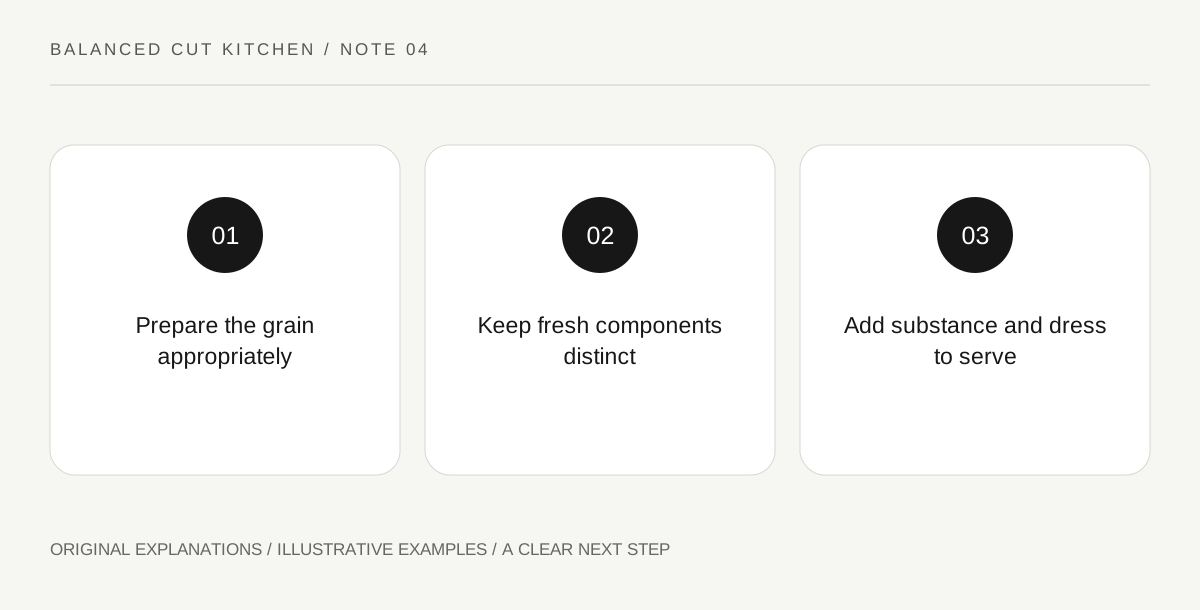
Meal design3 min read
A bowl of herbs, tomatoes and bulgur can be refreshing but may need additional substance to serve as dinner. The useful question is what role each ingredient plays, not whether the salad looks large. This guide builds a flexible main meal while preserving the fresh texture that makes the dish appealing.
Read the guide ↗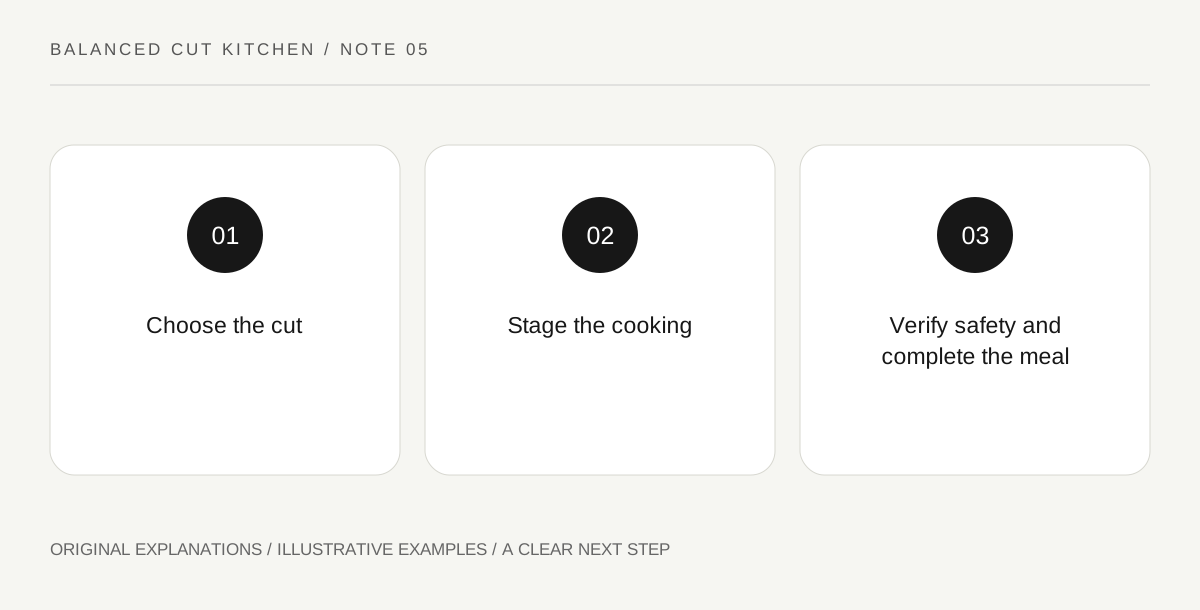
Cooking technique3 min read
Cabbage can be crisp, tender or watery depending on cut size, pan load and cooking order. A staged skillet makes it easier to use a large vegetable without ending with a soft pile. The meal still needs appropriate substance and seasoning; cabbage is a useful ingredient, not a shortcut around adequate food.
Read the guide ↗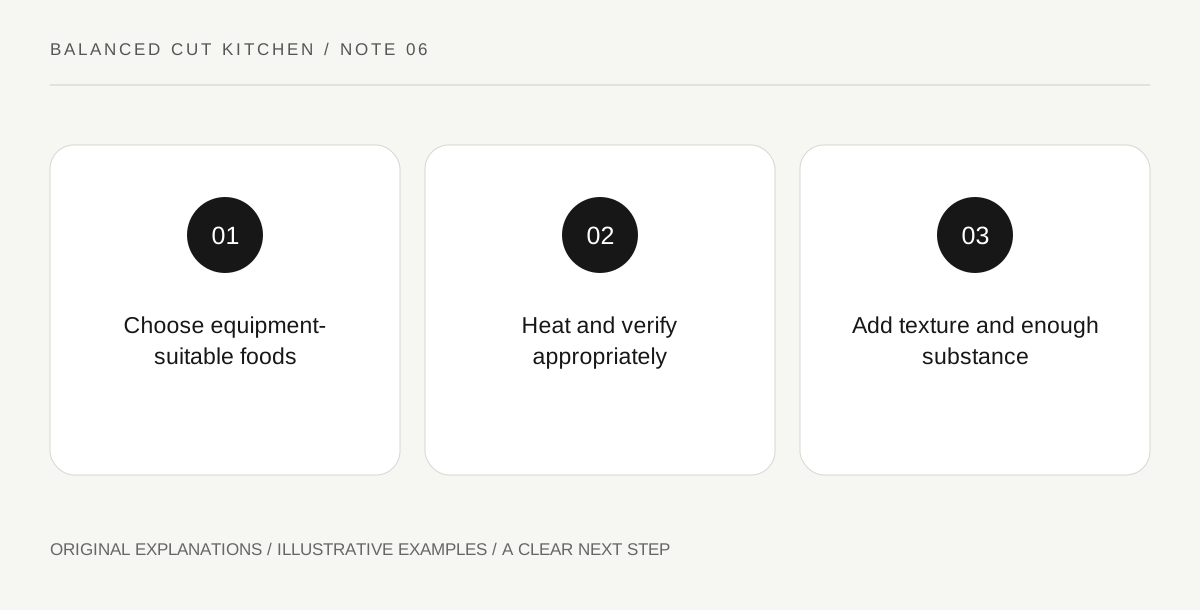
Pantry meals3 min read
A microwave can support a balanced meal when the ingredients and package methods are chosen deliberately. It is not necessary to imitate a stovetop recipe or rely on one tiny prepared entrée. Think in food roles, then account for safe heating, container suitability and the texture you want at the table.
Read the guide ↗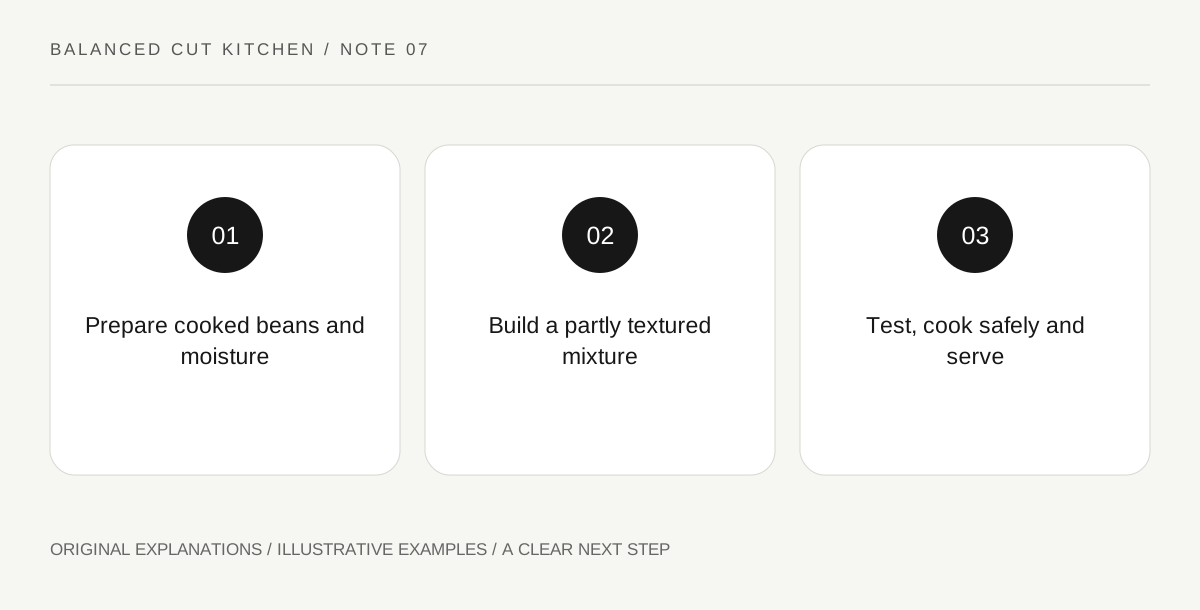
Cooking technique3 min read
A bean patty that collapses may be too wet, too smooth or insufficiently rested rather than short of another large spoonful of flour. Understanding structure makes it easier to adapt a mixture. The goal is a pleasant meal component, without treating homemade patties as automatically lighter or more nutritious than every alternative.
Read the guide ↗
Meal design3 min read
Roasted squash can bring sweetness, softness and color to a meal, but a tray of orange vegetables is not automatically dinner. A useful plan connects the squash with complementary protein foods, textures and other components. The cooking method should fit the variety and your equipment rather than a universal peeling rule.
Read the guide ↗
Meal design3 min read
A packed sandwich can become soggy because wet components meet bread too early. The answer is often sequencing and storage, not deleting vegetables or relying on a dry filling. A practical design keeps the meal appealing while giving food safety, protein foods and adequate substance their own place.
Read the guide ↗
Cooking technique3 min read
A sauce can make a balanced meal more enjoyable, but repeated unmeasured additions can obscure why the dish tastes flat or salty. A small tasting sequence helps distinguish moisture, acidity, aroma and seasoning. The purpose is flavor control, not a rule that sauce must be banned or every meal must taste restrained.
Read the guide ↗
Pantry meals3 min read
A tortilla bake can use ordinary pantry foods and provide a satisfying dinner, but too much liquid makes the layers disappear. The useful decisions are the filling's moisture, sauce amount and the rest of the meal. This is a flexible cooking framework rather than an authentic regional recipe or a fixed diet portion.
Read the guide ↗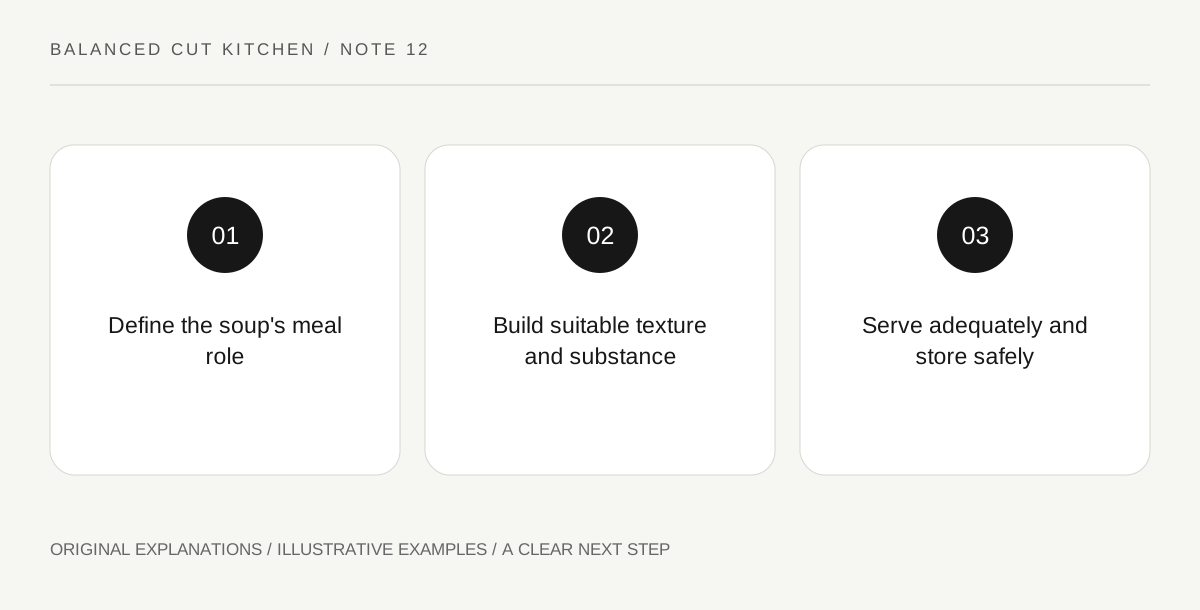
Meal design3 min read
A hot vegetable soup can feel like a full dinner while providing less substance than you expected. A larger bowl does not automatically solve that problem. Think about the soup's ingredients, a meaningful protein-food role and what belongs alongside it, while keeping blending and storage safe.
Read the guide ↗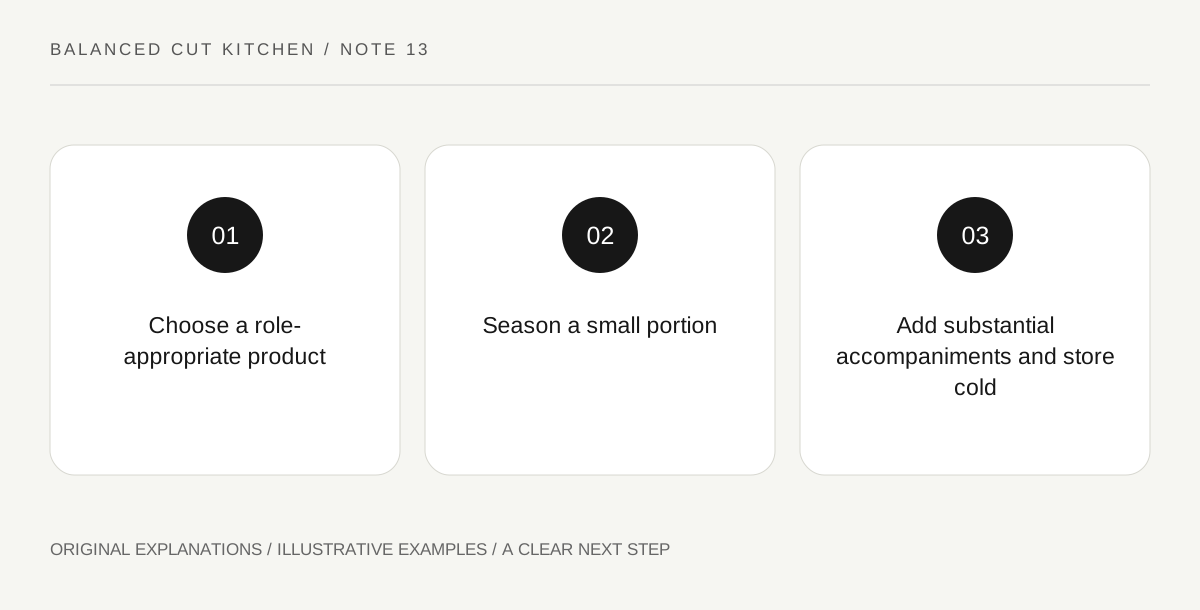
Meal design3 min read
Plain yogurt can become a savory sauce or a component of a meal rather than a sweet snack by default. The useful design question is what accompanies it. A bowl of yogurt with a few garnishes may need more food, and a dairy-free alternative may have a different nutritional profile.
Read the guide ↗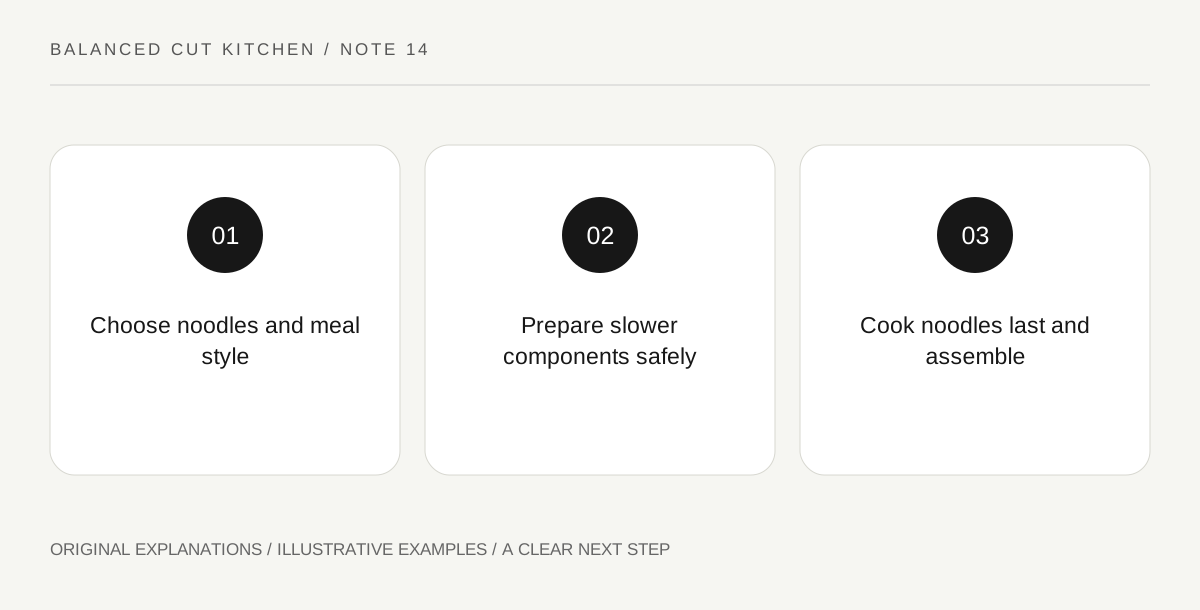
Meal design3 min read
A balanced noodle meal does not require hiding or eliminating the noodles. It benefits from deliberate cooking order, a clear protein-food component and vegetables that remain pleasant. This framework focuses on assembling a hot meal rather than prescribing a noodle portion or claiming that one variety causes weight loss.
Read the guide ↗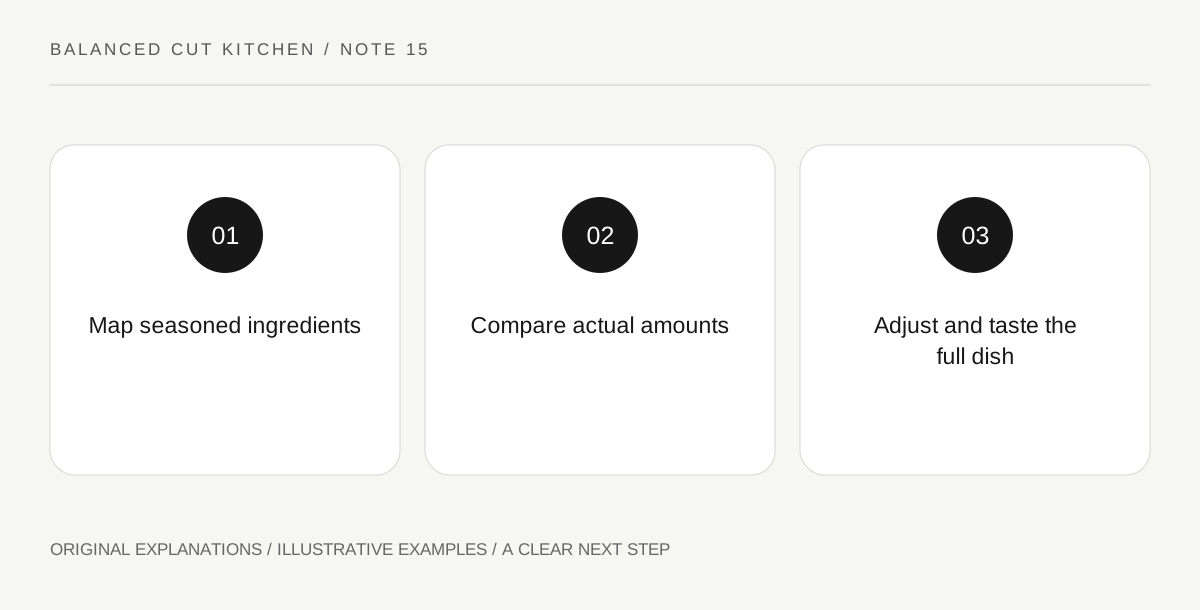
Pantry meals3 min read
An individually reasonable ingredient can become part of a salty meal when stock, sauce, canned foods and toppings all contribute. A label review is more useful when it follows the whole dish. The goal is flavorful cooking that fits your needs, without assuming homemade food is automatically low in sodium or that salt is the only source.
Read the guide ↗
Realistic routines3 min read
Trying to add beans, bran and raw vegetables everywhere at once can make a new eating pattern unpleasant and difficult to interpret. A gradual food-based approach is easier to adjust. Fiber needs and tolerance vary, especially with medical conditions, so this guide offers meal-design ideas rather than a treatment for digestive symptoms.
Read the guide ↗
Realistic routines3 min read
A meal can look disciplined and still be too small or poorly balanced for the person eating it. Hunger after a deliberately sparse dinner is useful information. A realistic weight-management approach can examine ingredients, timing and satisfaction without turning food into a reward for enduring discomfort or promising a particular rate of loss.
Read the guide ↗
Meal design3 min read
Takeout can be part of an ordinary eating routine, especially on a demanding day. The useful question is what would make the meal work better for you at home. A simple addition may improve variety or substance without requiring a second dinner, moral labels or an exact nutrient calculation that the available information cannot support.
Read the guide ↗
Meal design3 min read
A vegetable-centered meal can become monotonous when every bite has the same raw crunch or the same soft texture. Contrast can improve the eating experience without a complicated recipe. The aim is an enjoyable, adequate meal with clear ingredient roles, rather than a large bowl designed mainly to look low in energy.
Read the guide ↗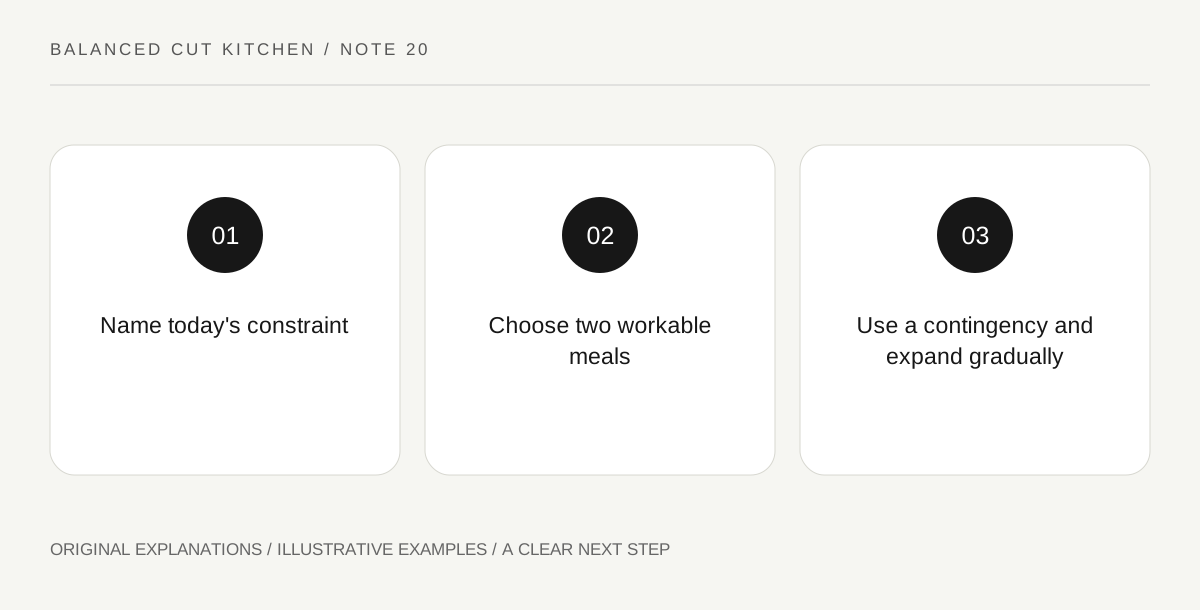
Realistic routines3 min read
When work, illness or travel interrupts cooking, an ambitious reset can create another unfinished shopping bag. A smaller restart makes the next meals concrete. Choose two dinners that fit your current time and energy, with adequate food and safe handling, instead of using the week as a reason for a restrictive compensation plan.
Read the guide ↗