Make a vegetable soup substantial without relying on a bigger bowl
A hot vegetable soup can feel like a full dinner while providing less substance than you expected. A larger bowl does not automatically solve that problem. Think about the soup's ingredients, a meaningful protein-food role and what belongs alongside it, while keeping blending and storage safe.
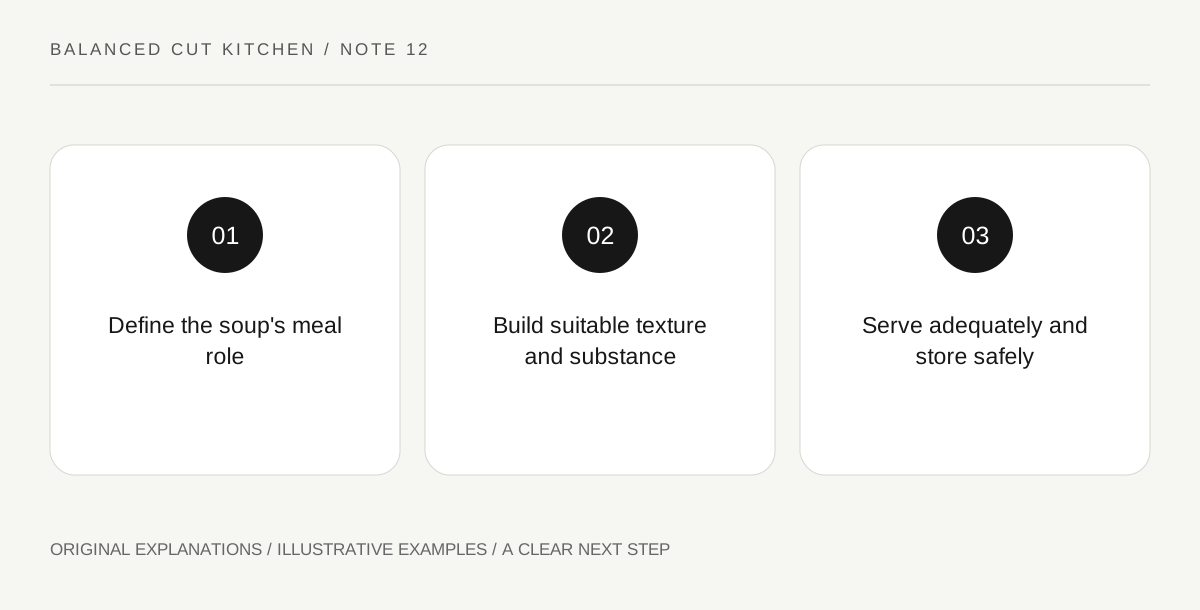
Original explanatory diagram. Read the full method and limitations below.
Decide what the soup is meant to do
A light starter and a main-meal soup have different jobs. If this is dinner, identify what will provide more than warm liquid and vegetables. USDA's food groups offer a useful way to notice missing roles without prescribing a universal bowl size. Choose a suitable recipe, then decide whether beans, lentils, another protein food or a substantial side will be included. Keep medical dietary instructions in view, particularly if fluid or sodium intake is restricted. A soup described as vegetable does not automatically fit every person's needs, and a large serving is not a substitute for checking the actual ingredients.
Build texture with the vegetables you have
Roasted peppers, carrots or other suitable cooked vegetables can make a smooth base, while chopped vegetables create a different eating experience. Follow a recipe that suits the ingredients rather than blending everything indiscriminately. If using a blender, obey its hot-liquid instructions and avoid sealing hot soup in equipment not designed for it. A partly blended soup can retain pieces while gaining body. This is a culinary choice rather than a claim that smooth soup is better for weight management. If you need a prescribed texture for swallowing, follow the relevant professional plan instead of adapting from a general cooking article.
Add substance deliberately
Fully cooked beans can be blended into a suitable base or added whole, depending on the recipe and desired texture. A separate sandwich, egg dish or other appropriate food may fit better in another meal. The amount matters: a few decorative beans do not necessarily provide the main component you intended. Taste before adding more salt, considering stock, canned vegetables and toppings. Check allergens in prepared broth and dairy or soy additions. Do not assume a vegetable soup is vegan, gluten-free or allergen-free simply because its name contains no animal food. Keep ingredient information clear when serving others.
Review comfort, leftovers and repeatability
Serve enough food for your needs and keep an additional component available if the soup is not satisfying. The aim is a meal that supports an ordinary evening, not a contest to tolerate hunger after the smallest possible dinner. Cool and refrigerate leftovers promptly in appropriate containers and follow storage and reheating guidance. A large pot should not sit at room temperature until fully cold. Record which ingredient provided useful body or substance so the next batch is easier to plan. A soup can be economical and enjoyable without being labeled detoxifying or credited with a guaranteed fat-loss effect.
Think about how the soup will be eaten in the actual setting. A lunch container, spoon and reheating method may be necessary, while a side eaten separately can keep the main soup recipe straightforward. If the workplace cannot support that arrangement, choose a different meal format instead of relying on an inaccessible plan.
An illustrative soup dinner
Dev makes a roasted-pepper soup from a suitable recipe and recognizes that it was designed as a starter. He adds an appropriate fully cooked bean component and serves bread and a vegetable side according to appetite. He follows safe hot-liquid blending and leftover handling instead of making a much larger bowl of the same light soup.
Practical checks
Optional checkboxes save only in this browser.
Questions that come up
Does a bigger bowl always make soup a complete meal?
No. Ingredients and the rest of the meal matter more than bowl volume alone.
Can I cool a large pot on the counter all evening?
No. Follow prompt safe cooling and refrigeration guidance. Large batches need appropriate handling rather than prolonged room-temperature cooling.
References and scope
These sources support the factual background. Examples and exercises are original illustrative teaching material. References do not imply endorsement.
- USDA MyPlate: Vegetable Group — Vegetable variety and use of fresh, frozen and canned forms in a balanced pattern.
- USDA MyPlate: Protein Foods Group — Varied protein foods including beans, lentils, eggs, seafood and soy.
- USDA FSIS: Leftovers and Food Safety — Prompt refrigeration, safe leftover storage and reheating.