Turn an herb-heavy bulgur salad into an actual meal
A bowl of herbs, tomatoes and bulgur can be refreshing but may need additional substance to serve as dinner. The useful question is what role each ingredient plays, not whether the salad looks large. This guide builds a flexible main meal while preserving the fresh texture that makes the dish appealing.
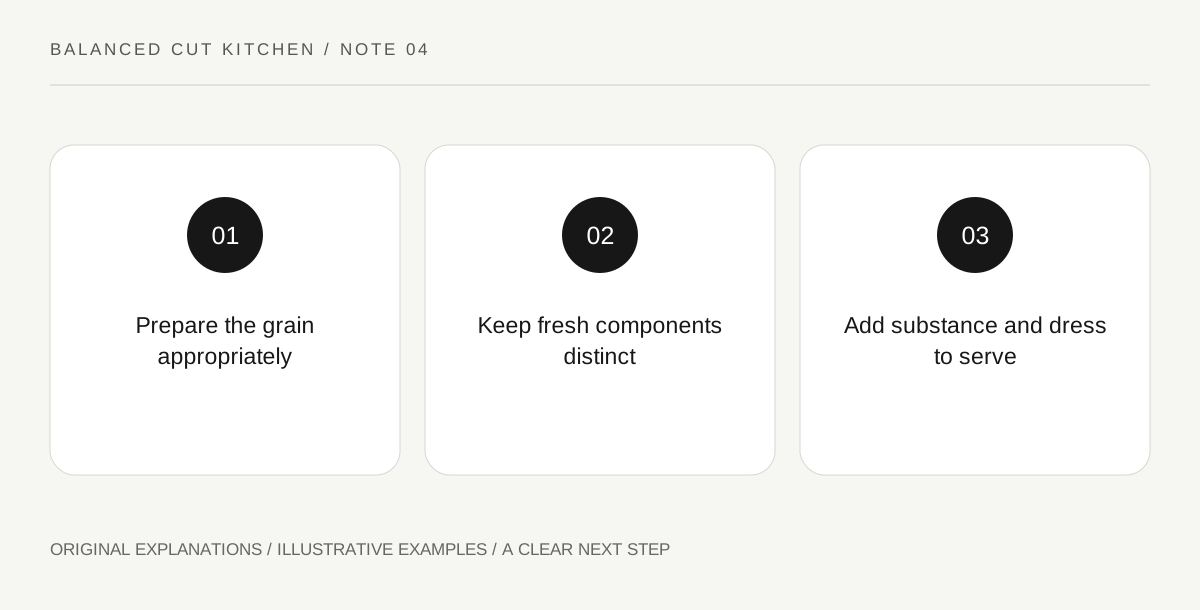
Original explanatory diagram. Read the full method and limitations below.
Treat bulgur as a grain with its own method
Choose the bulgur grade specified by a suitable recipe or follow its package directions. Fine and coarse products can need different preparation, so do not assume every bag is ready after the same soak. Bulgur is wheat and is unsuitable for someone who must avoid wheat or gluten. USDA encourages whole-grain choices within a varied eating pattern, but that does not make a particular grain appropriate for every person. Prepare the amount that fits the meal and allow it to reach the intended texture. A hard center or waterlogged finish should be solved through the method, not hidden under extra dressing.
Prepare herbs and vegetables for a dry mixture
Wash produce appropriately and dry leafy herbs before chopping. Wet herbs and very juicy vegetables can dilute the dressing and soften the grain. Cut tomatoes and other components to a size that is pleasant to eat together. If a recipe calls for draining excess juice, do so rather than compensating with more dry grain after assembly. Keep preparation clean and separate from raw animal foods. The aim is a fresh mixture with distinct pieces, not a rigid recipe that requires one herb combination. Use familiar available produce and describe the adaptation honestly rather than calling every grain salad traditional tabbouleh.
Add a clear protein-food component
Choose an appropriate addition such as chickpeas, another bean or a separately prepared protein food that suits your diet. USDA includes varied plant and animal options within the protein-food group. The portion depends on needs and the rest of the meal; a few decorative beans do not automatically make the salad substantial. If using cheese or another salty ingredient, consider how it changes the seasoning. A main-meal version should be designed as such rather than simply serving a larger amount of a side dish and assuming the extra volume answers every nutritional question.
Dress for the moment of eating
Combine an appropriate amount of oil, acidity and seasoning according to taste and dietary needs. Add gradually, toss and assess before increasing. Serve with any additional food needed to make the meal satisfying, such as fruit or a suitable dairy or fortified alternative elsewhere in the eating pattern. If preparing ahead, keep fragile or very wet components separate when that preserves texture, while maintaining safe refrigeration. Review whether the meal leaves you comfortably fed and whether the preparation effort fits your day. A colorful bowl can support balanced eating without a guaranteed calorie deficit or a universal portion formula.
If you prefer a warmer meal, serve the prepared grain and beans warm beside the fresh herbs and vegetables rather than heating the entire dressed salad. Keep safe temperatures and storage in mind. A deconstructed plate can preserve the same ingredient roles while making the texture more appealing on a cool evening.
An illustrative dinner bowl
Tess prepares coarse bulgur according to its package, dries washed parsley and chops tomatoes. She adds a substantial bean component and dresses the bowl close to dinner. She keeps an extra side available if needed. The goal is a useful main meal, not the largest possible salad made from the fewest ingredients.
Practical checks
Optional checkboxes save only in this browser.
Questions that come up
Is bulgur gluten-free?
No. Bulgur is made from wheat. Choose an appropriate alternative if you need to avoid wheat or gluten.
Can a large bowl still be an incomplete meal?
Yes. Volume alone does not describe its nutritional roles or whether it meets your needs. Look at the ingredients and your overall eating pattern.
References and scope
These sources support the factual background. Examples and exercises are original illustrative teaching material. References do not imply endorsement.
- USDA: Make Half Your Grains Whole Grains — Whole-grain selection and varied grain choices.
- USDA MyPlate: Protein Foods Group — Varied protein foods including beans, lentils, eggs, seafood and soy.
- FDA: Selecting and Serving Produce Safely — Produce washing and safe preparation.