Build a sandwich that stays pleasant without removing every moist ingredient
A packed sandwich can become soggy because wet components meet bread too early. The answer is often sequencing and storage, not deleting vegetables or relying on a dry filling. A practical design keeps the meal appealing while giving food safety, protein foods and adequate substance their own place.
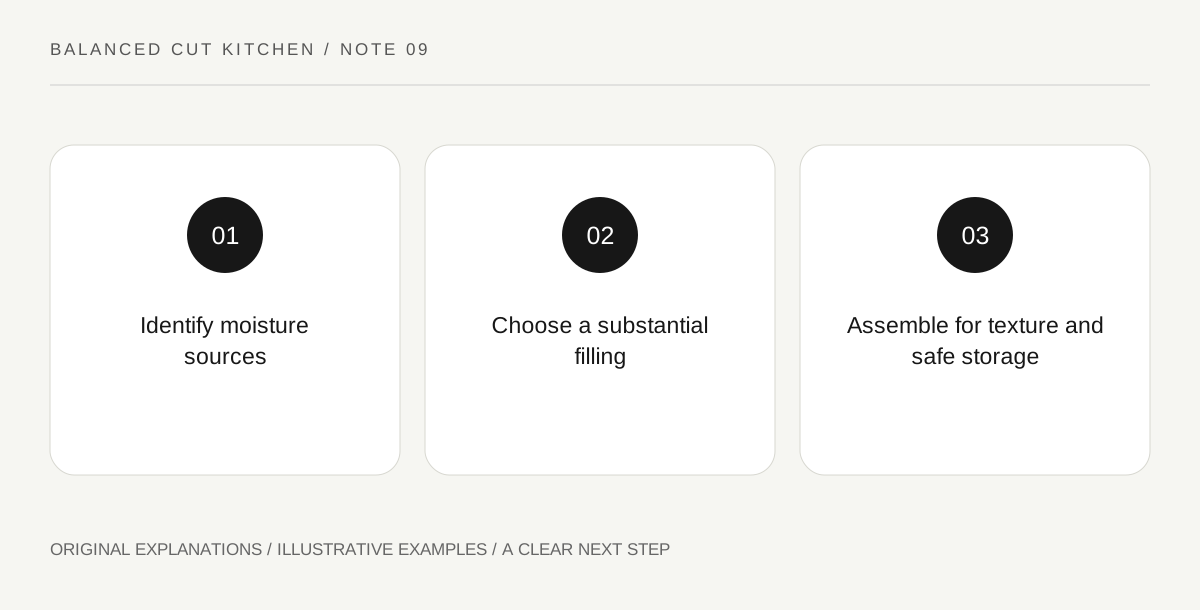
Original explanatory diagram. Read the full method and limitations below.
Identify the main source of moisture
Look at tomatoes, washed leaves, pickles, sauces and warm fillings. Each adds a different kind of moisture. Dry washed leaves appropriately, drain suitable ingredients and avoid sealing a warm filling into bread unless following a safe method designed for that purpose. FDA's produce guidance supports washing and clean preparation, while the assembly choices here are culinary examples. Bread also differs in how it handles a filling. A soft thin slice may need a different arrangement from a sturdy roll. Do not treat a wet sandwich as proof that vegetables do not belong at lunch; the problem may be preparation and timing.
Give the filling a clear role
Choose an appropriate protein food and enough other components to make the sandwich a meal for your needs. Beans, eggs, suitable dairy, soy or animal foods can all serve different versions, with safe preparation and allergy considerations. A thin decorative smear may not provide the substance you expect. Consider texture as well as the ingredient name: a drained bean mash behaves differently from loose beans. Keep any professional dietary instructions visible. The goal is not to build the smallest possible sandwich but one that remains manageable, satisfying and enjoyable when lunchtime arrives.
Change assembly timing before changing all ingredients
Keep a wet sauce or sliced tomato separate until eating when practical. A dry barrier ingredient may help texture, but it is not a food-safety barrier and does not make unrefrigerated perishable filling safe. Choose a container that protects bread from crushing and keep crisp sides separate. If assembling early is essential, test one arrangement rather than preparing an entire week's identical sandwiches. A two-minute assembly at lunch may be feasible in one workplace and impossible in another. Design for the real setting, including handwashing access, utensils and whether you have a clean surface available.
Keep cold food cold and the meal adequate
Perishable fillings need appropriate cold storage and transport. Follow current food-safety guidance for time and temperature rather than assuming a cool-feeling bag is sufficient. A sandwich that looks attractive can still have an unsafe storage history. Pack additional food as needed, such as a vegetable side or fruit, without using it to compensate for an intentionally inadequate main item. If the result remains unappealing, a deconstructed plate may serve the same ingredients better. The successful outcome is a reliable lunch, not a sandwich that survives every condition because the useful parts have been removed.
Try the intended lunch arrangement once before relying on it for an important day. Pack a sandwich for the same length of time under safe conditions and note whether the bread, filling and separate components remain practical. If you need a knife, plate or refrigerator, include that requirement in the plan. A sandwich that works at home may be awkward at a desk with no clean assembly space. The deconstructed alternative can use the same foods and avoid unnecessary waste, provided the perishable components remain safely stored. Texture testing should never involve leaving food at an unsafe temperature to see whether it still tastes acceptable.
An illustrative packed lunch
Casey dries washed lettuce, uses a suitable protein filling and packs tomato separately. The sandwich travels under appropriate cold-storage arrangements, and the tomato is added at lunch. A fruit and vegetable side complete the meal according to appetite. The moisture fix changes assembly timing rather than eliminating produce.
Practical checks
Optional checkboxes save only in this browser.
Questions that come up
Does a dry barrier ingredient keep a filling safe without refrigeration?
No. A texture barrier does not control foodborne illness risk. Perishable fillings still need appropriate cold storage and transport.
Must a packed lunch remain a sandwich?
No. The same foods can be served as a deconstructed plate when that works better. Keep ingredients safely stored and include enough food for your needs.
References and scope
These sources support the factual background. Examples and exercises are original illustrative teaching material. References do not imply endorsement.
- FDA: Selecting and Serving Produce Safely — Produce washing and safe preparation.
- USDA FSIS: Leftovers and Food Safety — Prompt refrigeration, safe leftover storage and reheating.