Use roasted squash as a substantial vegetable, not a complete dinner by itself
Roasted squash can bring sweetness, softness and color to a meal, but a tray of orange vegetables is not automatically dinner. A useful plan connects the squash with complementary protein foods, textures and other components. The cooking method should fit the variety and your equipment rather than a universal peeling rule.
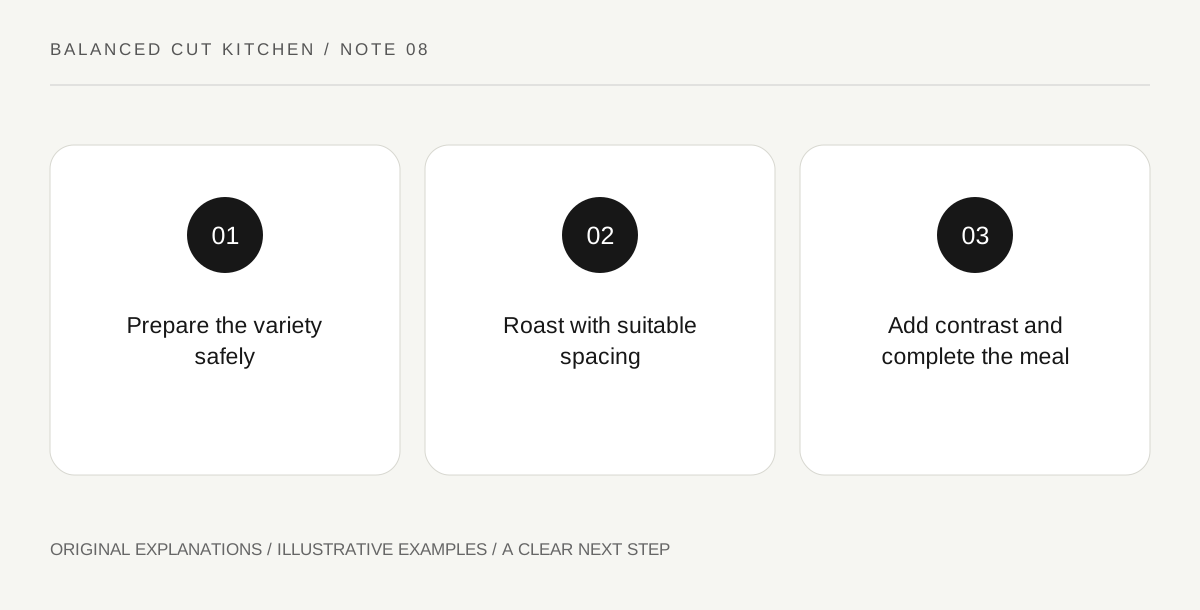
Original explanatory diagram. Read the full method and limitations below.
Choose the squash and a safe preparation method
Squash varieties differ in skin, shape and firmness. Follow a suitable recipe for the variety you buy and do not assume every skin should be eaten or removed in the same way. Use a stable cutting surface and an appropriate knife; ask for help or buy prepared pieces if cutting a hard squash is unsafe or impractical. FDA recommends washing produce before cutting, even when the outer part will not be eaten. Keep the task realistic. A whole squash can be economical, while pre-cut pieces may make a vegetable meal possible on a busy or low-energy day.
Cut for even cooking and room on the tray
Aim for reasonably consistent pieces within the chosen recipe. A mixture of tiny cubes and large wedges can finish unevenly. Use the appropriate tray and spread rather than piling pieces together if the goal is roasting. Follow the recipe's oven method and check the actual texture, because variety, size and equipment affect timing. A modest appropriate amount of oil can support the method; an oil-free label is not required for balanced eating. Avoid adding a sweet glaze automatically before tasting the squash itself. The point is a pleasant roasted vegetable, not turning natural sweetness into a nutrition promise.
Add contrast and a clear protein role
Pair the soft squash with a suitable bean, lentil, dairy, soy or animal protein component according to your needs. USDA encourages varied protein foods. A crunchy vegetable or an appropriate seed topping can add contrast, while a grain or bread may provide further substance. Check allergens in dressings and toppings. Do not count a few scattered seeds as a universally adequate protein serving. A meal can be plant-based without being sparse, and it can include an animal food without losing the vegetable's central role. Choose components that are enjoyable together rather than treating the plate as a checklist of diet symbols.
Keep leftovers useful without losing safety
Cool and refrigerate leftovers promptly under appropriate food-safety guidance. Consider which components should remain separate for texture and which can be reheated together safely. A leftover squash portion might be served with a different suitable protein and grain, but its storage clock does not restart because you change the recipe. Do not leave a tray on the counter for hours while deciding how to use it. Review whether the original batch size matched your household. A smaller tray that gets eaten can be more practical than a large seasonal bargain that produces food you no longer want or cannot store safely.
Consider the sweetness of the full combination. If the squash is naturally sweet, a tart or savory accompaniment may create more contrast than adding another sweet sauce. Taste a small assembled bite rather than judging each component alone. If the same batch will serve several meals, keep the main seasoning adaptable and add distinctive finishing flavors at serving. This preserves choice without claiming that any particular flavor combination changes metabolism or appetite in a predictable way.
An illustrative squash dinner
Morgan roasts prepared squash pieces using a suitable recipe, then serves them with a substantial lentil component, a crisp vegetable and bread. She packs leftovers promptly and keeps the crisp element separate. The next meal uses the squash in a different combination without treating it as newly cooked for storage purposes.
Practical checks
Optional checkboxes save only in this browser.
Questions that come up
Does every squash need the same peeling method?
No. Varieties differ in skin and firmness. Use a suitable recipe and safe preparation method for the actual squash, and ask for help or use prepared pieces if cutting is difficult.
Does a tray of squash make a complete dinner?
Not automatically. Consider protein foods, other substantial components and your appetite. The vegetable can be central while the rest of the meal supplies complementary roles.
References and scope
These sources support the factual background. Examples and exercises are original illustrative teaching material. References do not imply endorsement.
- USDA MyPlate: Vegetable Group — Vegetable variety and use of fresh, frozen and canned forms in a balanced pattern.
- USDA MyPlate: Protein Foods Group — Varied protein foods including beans, lentils, eggs, seafood and soy.
- FDA: Selecting and Serving Produce Safely — Produce washing and safe preparation.