Use plain yogurt as one part of a savory meal, with texture and substance
Plain yogurt can become a savory sauce or a component of a meal rather than a sweet snack by default. The useful design question is what accompanies it. A bowl of yogurt with a few garnishes may need more food, and a dairy-free alternative may have a different nutritional profile.
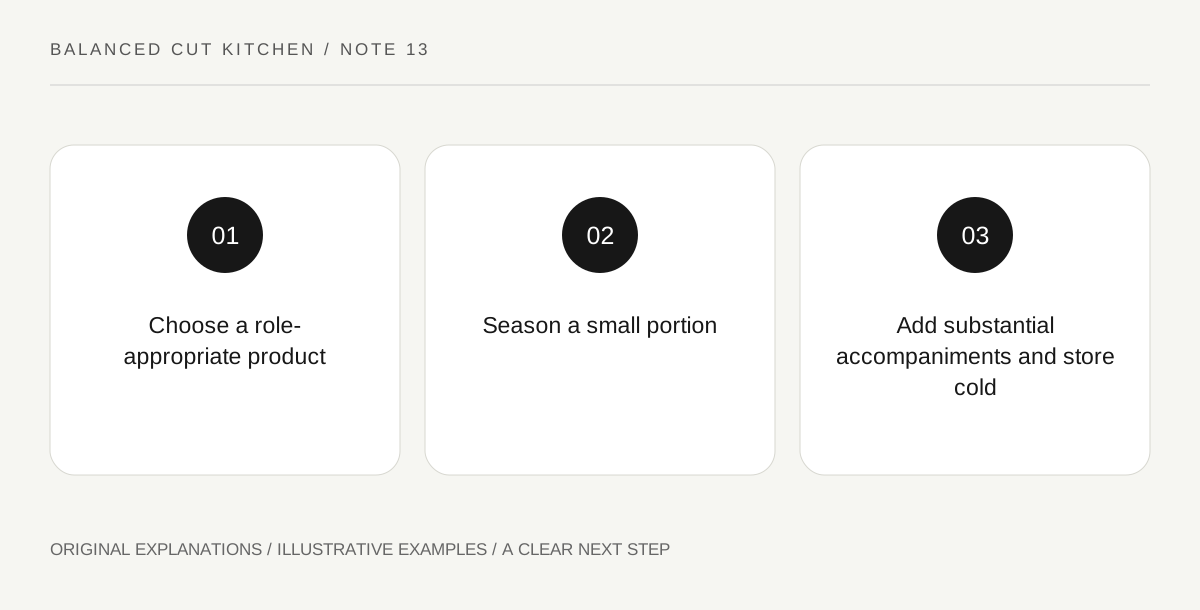
Original explanatory diagram. Read the full method and limitations below.
Choose the product for the role
Decide whether yogurt is the sauce, a main dairy component or one small part of a plate. Check the product's ingredients, texture and label rather than assuming every tub has the same protein or added-sugar content. FDA explains that label nutrients refer to a stated serving amount; that amount is not a personalized recommendation. A strained yogurt and a thinner product behave differently in a sauce. Plant-based alternatives also vary substantially, so do not assume a coconut-based and a fortified soy product have identical roles. Choose an appropriate option for allergies, dietary instructions and the eating pattern you follow.
Build a savory flavor in a small test
Combine a small portion with suitable herbs, a little acidity or another preferred seasoning and taste before changing the whole tub. Use clean utensils and keep the product refrigerated appropriately. A grated vegetable can add freshness but also water, so prepare it according to a suitable recipe if texture matters. Check salt already present in additions. The goal is a flavor you enjoy, not a rule that sweet food is forbidden or that plain yogurt is automatically a diet product. If the sauce becomes too thin, reconsider the wet ingredient and product choice rather than adding random dry powders.
Add foods that make it a meal
Consider a suitable grain or bread, vegetables and an additional protein food if needed for the intended meal. A yogurt sauce can accompany lentils, roasted vegetables or a grain dish without claiming to replace all other components. Keep texture contrast in mind: a crisp vegetable and a soft cooked element create a different experience from a bowl in which everything is creamy. Wash produce safely and check allergens in bread, seeds and condiments. Amounts depend on appetite and needs. The visual size of a decorative bowl does not establish that the meal will sustain you through the afternoon.
Keep preparation and storage realistic
Mix only what you expect to use within appropriate storage guidance, and keep any crunchy additions separate until eating. Do not return a used spoon or leftover serving sauce to the original container. If carrying the meal, maintain suitable cold storage for perishable foods. Record the combination that worked and the product used, because a different yogurt may change texture next time. A savory meal can be quick without being a snack-sized substitute for dinner. Review whether it was enjoyable, adequate and practical rather than judging success by the absence of dessert-like ingredients.
Use only a clean serving utensil to portion yogurt from the original tub, then close and refrigerate it promptly. Mix herbs and other additions in a separate bowl. This makes the flavor easier to adjust and keeps the untouched product available for another meal without carrying used sauce or serving leftovers back into it.
An illustrative lunch plate
Em prepares a small herb-yogurt sauce using a plain product whose label she understands. She serves it with lentils, bread and prepared vegetables, keeping crisp items separate until lunch and maintaining cold storage. The yogurt connects the plate; it is not expected to provide every food role by itself.
Practical checks
Optional checkboxes save only in this browser.
Questions that come up
Are all dairy-free yogurts nutritionally interchangeable?
No. Ingredients, fortification and protein can differ. Read the actual label and choose an option fitting your needs.
Must yogurt always be eaten sweet?
No. It can be used in savory combinations. The complete meal matters more than whether one ingredient is associated with breakfast or dessert.
References and scope
These sources support the factual background. Examples and exercises are original illustrative teaching material. References do not imply endorsement.
- FDA: How to Understand and Use the Nutrition Facts Label — Serving-size interpretation and comparing labeled nutrient amounts.
- USDA FSIS: Leftovers and Food Safety — Prompt refrigeration, safe leftover storage and reheating.