Use soft and crisp components to make a vegetable-centered meal worth repeating
A vegetable-centered meal can become monotonous when every bite has the same raw crunch or the same soft texture. Contrast can improve the eating experience without a complicated recipe. The aim is an enjoyable, adequate meal with clear ingredient roles, rather than a large bowl designed mainly to look low in energy.
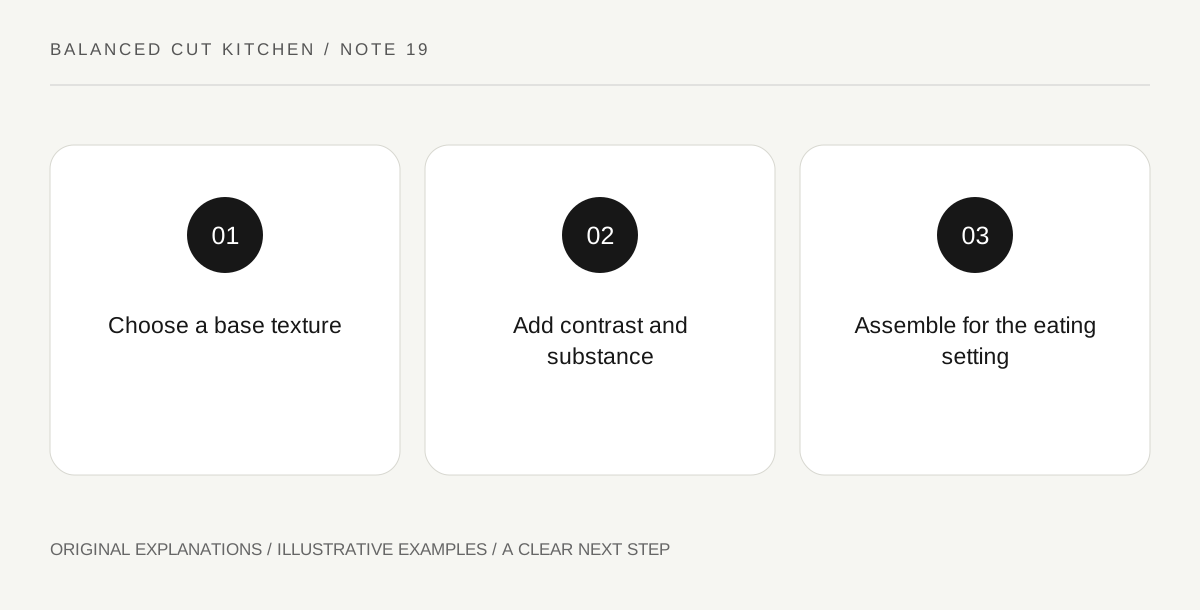
Original explanatory diagram. Read the full method and limitations below.
Choose a base texture instead of every vegetable at once
Decide whether the meal begins with crisp leaves and cut vegetables or a warm soft component such as roasted roots. Then add a contrasting element deliberately. USDA encourages vegetable variety, but variety does not require buying a dozen perishable items for one bowl. Choose a few foods you enjoy and can use. Wash produce safely and dry leaves appropriately. Keep any required texture modifications from a professional plan in view; a crunchy topping is not suitable for everyone. The culinary framework is adaptable and should not override swallowing, dental or other individual care instructions.
Give cooked components a clear place
Roasted, steamed or otherwise appropriately cooked vegetables can make a raw-heavy meal more comfortable and flavorful. Use a suitable recipe and let the component reach the serving condition intended for the dish. Do not place a very hot ingredient against delicate leaves unless wilting is deliberate. If preparing ahead, maintain safe temperature and storage rather than leaving food out until it becomes convenient to mix. A warm component and a cool component can be served beside each other instead of forced into one container. The plate can communicate contrast without a tall decorative stack or an enormous salad bowl.
Add substance and a connecting flavor
Choose an appropriate protein food and grain or other substantial component according to your needs. A few nuts or seeds can add texture, but they are not automatically the only protein component required. Check allergens in toppings and dressings. Use a suitable dressing amount to connect the ingredients rather than drowning crisp foods or leaving the meal unpleasantly dry. An acidic element can brighten flavor, while a creamy one may provide a different experience. Neither label determines whether the whole meal fits a weight-management goal. The ingredients, amounts and overall pattern matter more than the visual category of salad.
Keep assembly close to eating when texture matters
Store delicate and wet components separately where practical, maintaining appropriate refrigeration. Add crisp toppings near serving so they do not absorb moisture unnecessarily. If the meal is packed for later, choose a format that can actually be assembled in the available setting. A layered jar is not automatically convenient if you have no bowl or clean place to mix it. Review the meal after eating: was it enjoyable, enough food and reasonable to prepare? Record the contrast that worked, such as soft squash with crisp cabbage, rather than demanding a new collection of ingredients every time.
Texture contrast can also come from cutting rather than another purchase. Thin slices and larger soft pieces of the same suitable vegetable create a different experience, provided the preparation and serving format fit your needs. A practical meal does not need an expensive topping to become interesting or a new recipe name to justify using familiar ingredients.
An illustrative contrast plate
Jess serves a soft cooked vegetable with crisp prepared cabbage, a suitable bean component and bread. She uses a modest dressing and keeps the crisp element separate until eating. The result is a vegetable-centered meal with substance and varied texture, rather than a larger version of a plain raw salad.
Practical checks
Optional checkboxes save only in this browser.
Questions that come up
Does variety require many ingredients in every meal?
No. A few complementary foods can create variety across texture and flavor, while broader variety develops over the eating pattern.
Are crunchy toppings suitable for everyone?
No. Adapt for allergies, dental needs and any prescribed texture plan. General cooking ideas do not replace individual instructions.
References and scope
These sources support the factual background. Examples and exercises are original illustrative teaching material. References do not imply endorsement.
- USDA MyPlate: Vegetable Group — Vegetable variety and use of fresh, frozen and canned forms in a balanced pattern.
- FDA: Selecting and Serving Produce Safely — Produce washing and safe preparation.