Give lentils and mushrooms separate jobs in a meatless mince
Lentils can provide substance while mushrooms contribute a savory texture, but cooking them together from the start can produce a wet, indistinct mixture. Separating their jobs makes a flexible mince for vegetables, pasta or a wrap. The method offers another protein-food option without requiring imitation meat or a promised nutritional outcome.
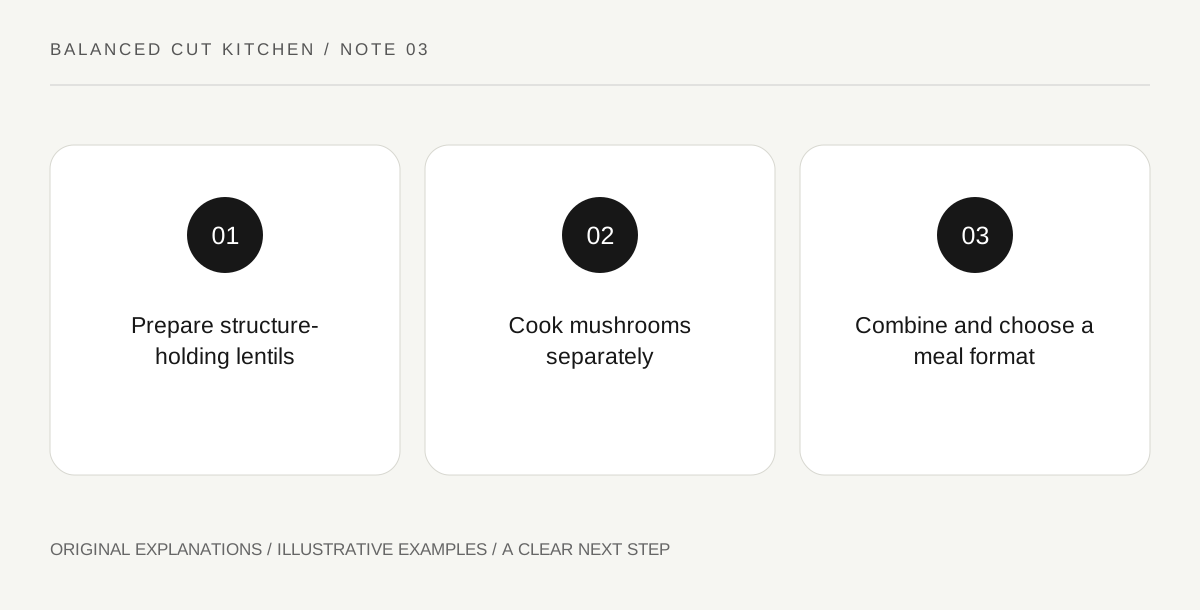
Original explanatory diagram. Read the full method and limitations below.
Choose lentils for structure
Use a lentil type and preparation that fits the texture you want. Lentils that hold their shape produce a different result from those that soften readily. Follow package directions for dry lentils, or drain a suitable ready-cooked product. USDA includes lentils among protein foods, but the amount needed in a meal is personal. Do not assume a spoonful scattered through mushrooms fills the same role as a substantial lentil component. Keep canned-product sodium information available if it matters to your needs. A good starting point is a familiar lentil whose cooked texture you can recognize rather than an unfamiliar ingredient chosen only for a diet label.
Let mushrooms lose their water
Clean and prepare mushrooms appropriately, then cook them using a suitable method until their released liquid is managed and the texture suits the dish. A crowded pan can retain moisture and make it harder to develop the finish you want. Cook in a manageable batch rather than adding more ingredients to a wet pan. Avoid using appearance as a safety test for any raw animal food added to a variation. This framework is meatless; if you adapt it with meat, follow a suitable recipe and thermometer guidance. The mushroom step is about texture and flavor, not a claim that browning creates a special fat-loss food.
Combine after the components are ready
Add the cooked lentils to the prepared mushrooms with a measured amount of tomato paste, herbs or another suitable seasoning. Stir gently enough to preserve the texture you chose. Add liquid only when the mixture needs it; a little sauce can bind while too much turns the mince into a stew. Taste before adding salt, considering the lentils and seasonings already used. Check allergens in stock, sauces or prepared ingredients. A meatless recipe is not automatically free from milk, wheat, soy or other allergens, and household preferences do not replace an accurate ingredient list.
Match the mince to a meal format
Use the mixture as a filling for a roasted vegetable, part of a pasta dish or a warm topping with a whole-grain side and additional vegetables. Choose a format that allows enough food for your appetite rather than treating the mince as a tiny diet garnish. Keep a moist filling from sitting against bread too early if texture matters. Refrigerate leftovers promptly and use appropriate storage and reheating guidance. At the next attempt, adjust one texture decision, such as the lentil type or the amount of added sauce. That teaches a repeatable cooking skill without claiming every batch has identical nutrition.
Keep a little of the mixture aside before adding a strong finishing sauce when household preferences differ. One person may enjoy a tomato-heavy mince while another prefers herbs. Separating the final flavor choice can preserve a common cooking method without requiring completely separate dinners or an inaccurate claim that everyone needs the same portion.
An illustrative filling
Robin drains ready-cooked lentils and cooks chopped mushrooms separately until the pan is no longer watery. She combines them with a modest amount of tomato paste and herbs, then uses the mixture in a roasted vegetable with a grain side. The separate steps preserve texture and make the dish easier to adjust.
Practical checks
Optional checkboxes save only in this browser.
Questions that come up
Can all lentil types be swapped without a texture change?
Not always. Some soften more readily than others. Follow package instructions and choose the form that fits the dish.
Does meatless mean allergen-free?
No. Sauces, stock and other ingredients may contain allergens. Check every actual product and communicate accurately.
References and scope
These sources support the factual background. Examples and exercises are original illustrative teaching material. References do not imply endorsement.
- USDA MyPlate: Protein Foods Group — Varied protein foods including beans, lentils, eggs, seafood and soy.
- USDA FSIS: Leftovers and Food Safety — Prompt refrigeration, safe leftover storage and reheating.