Build a microwave meal from foods with clear roles
A microwave can support a balanced meal when the ingredients and package methods are chosen deliberately. It is not necessary to imitate a stovetop recipe or rely on one tiny prepared entrée. Think in food roles, then account for safe heating, container suitability and the texture you want at the table.
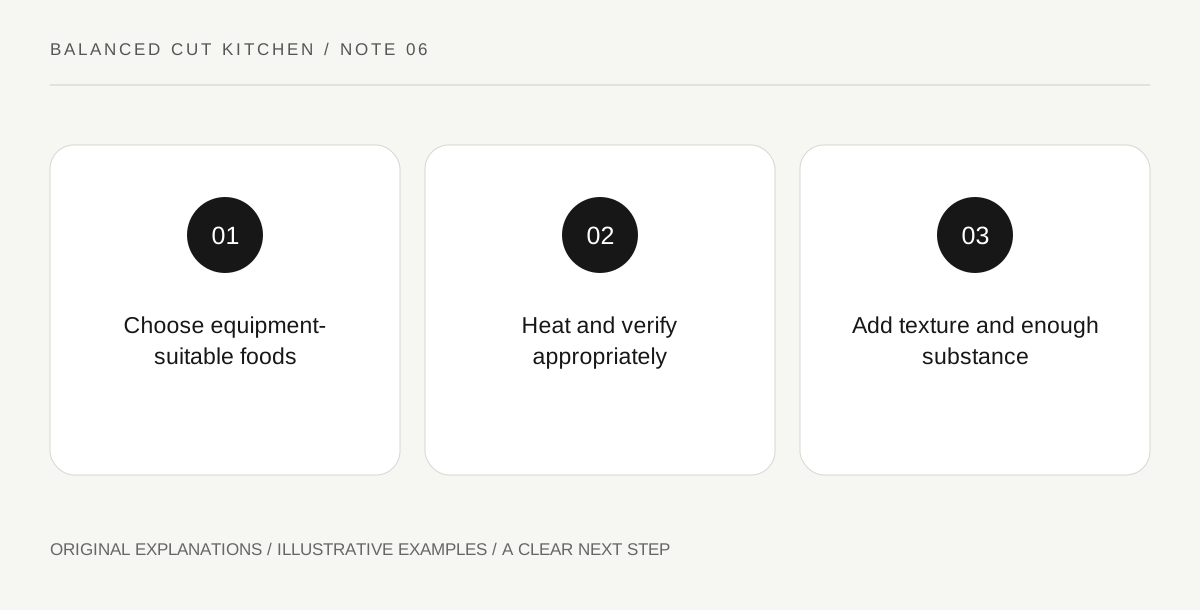
Original explanatory diagram. Read the full method and limitations below.
Choose components that fit the equipment
Select foods with microwave directions or a suitable tested method, such as a prepared grain, frozen vegetables and an appropriate ready-cooked protein. Read whether a package is ready to eat or must be cooked. A sealed pouch that looks convenient is not automatically microwave-safe in its packaging. USDA meal resources show that simple equipment can be useful, while balanced eating still depends on the foods chosen. Keep a plate, a suitable bowl and safe handling tools available. A microwave-only meal should be designed for that equipment rather than assembled from ingredients requiring techniques you cannot reliably perform.
Heat each component according to its needs
Follow package instructions about power, covering, stirring and standing time. Different ingredients may heat unevenly, so combining everything before cooking can create a hot exterior and cold center. Use a food thermometer when relevant, particularly for leftovers; USDA recommends reheating leftovers to 165°F or 74°C. Do not judge safety only by steam or a warm bowl. Follow the appliance instructions and avoid containers not intended for the microwave. Handle steam carefully when uncovering. If a food's instructions require a method you cannot carry out, choose a different component rather than inventing a shorter heating time.
Add texture after the heating step
A warm grain-and-vegetable mixture can benefit from an appropriate fresh or crunchy component added after heating. Washed produce, herbs or a suitable seed topping can change the eating experience without needing another cooking appliance. Check allergens and any dietary restrictions. Keep crisp ingredients separate until serving if they would soften in steam. A sauce can connect components, but add gradually and consider salt already present in packaged foods. The goal is a meal with distinct textures rather than a uniformly soft bowl made more exciting only by adding several salty condiments.
Scale the meal to your actual needs
A prepared pouch or entrée is a package unit, not automatically the right meal amount for you. FDA explains that serving size on a label describes a reference amount rather than a personal eating recommendation. Consider the complete meal and whether you need more food, while following any professional plan. Keep leftovers safe if a package is divided. A useful microwave routine can be inexpensive and repeatable, but no combination guarantees weight loss. Review what made it work: a clear food role, reliable heating method, pleasant texture and enough substance for the occasion.
Check how the workplace microwave is used before planning a tightly timed meal. If several people share it, a method requiring repeated long turns may be impractical. Choose components with compatible instructions or a simpler alternative. Availability of a microwave does not guarantee that it will be free during a short break.
An illustrative office dinner
Iris has only a microwave at work. She chooses a grain pouch with clear instructions, frozen vegetables and an appropriate ready-cooked protein. She follows each method, checks relevant reheating safety and adds a fresh component afterward. She adjusts the amount to her needs instead of treating one package as an automatic dinner prescription.
Practical checks
Optional checkboxes save only in this browser.
Questions that come up
Is a steaming bowl always safely heated?
No. Heating can be uneven. Follow instructions and use appropriate thermometer guidance for the food, especially leftovers.
Does one package equal one person's meal?
Not necessarily. Package size and label serving size do not determine personal needs. Consider the whole meal and your circumstances.
References and scope
These sources support the factual background. Examples and exercises are original illustrative teaching material. References do not imply endorsement.
- FDA: How to Understand and Use the Nutrition Facts Label — Serving-size interpretation and comparing labeled nutrient amounts.
- USDA FSIS: Safe Minimum Internal Temperature Chart — Thermometer-based safe cooking and reheating temperatures.
- USDA: Efficient Eats: Cook Once, Eat Multiple Times — Cooking efficiently for smaller households while preserving variety.