Build a bean-and-tortilla bake without turning every layer soggy
A tortilla bake can use ordinary pantry foods and provide a satisfying dinner, but too much liquid makes the layers disappear. The useful decisions are the filling's moisture, sauce amount and the rest of the meal. This is a flexible cooking framework rather than an authentic regional recipe or a fixed diet portion.
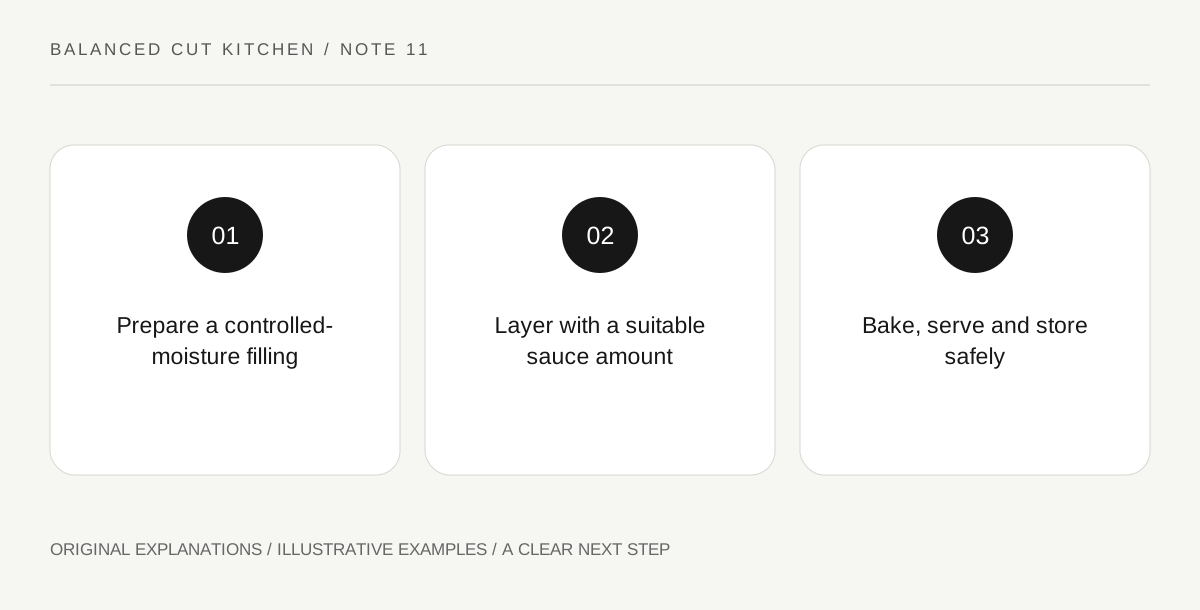
Original explanatory diagram. Read the full method and limitations below.
Choose a compatible tortilla and filling
Use a suitable tested recipe as the starting point, since corn and wheat tortillas can behave differently in a bake. Check allergens and package directions rather than treating every wrap as interchangeable. Choose fully cooked beans and vegetables that fit the flavor you want. USDA includes beans among protein foods, but the amount of beans in the dish determines whether they are a meaningful component or a scattered garnish. If using canned ingredients, drain them as the recipe requires. Keep raw meat out of an improvised version; adding it changes cooking and safety requirements beyond a simple assembly dish.
Control wet ingredients before layering
Cook watery vegetables appropriately and manage excess liquid before adding them to the filling. A juicy tomato mixture, undrained beans and a thin sauce can each seem reasonable alone but become too much together. Taste the prepared filling before layering, considering sodium already present in sauces and canned products. Do not add extra dry tortillas merely to absorb an uncontrolled liquid mixture without checking the recipe; the texture may become dense rather than balanced. A filling should be moist enough to eat comfortably while still behaving as a distinct layer. That is a culinary goal, not a command to remove every sauce or fat.
Use sauce to connect rather than flood
Follow the recipe's sauce amount and assembly method, then note adjustments that may be needed for the actual ingredients. Spread sauce where it serves the layers rather than pouring an unmeasured amount over the top because the surface looks dry. Cheese, if used, adds its own flavor and texture; it is not required to hide an underseasoned filling. Check labels for allergens and relevant nutrients. Bake according to the suitable recipe and verify any food-safety needs. A browned topping does not establish that the center is appropriately heated, especially when ingredients began cold.
Serve and store with the whole meal in mind
Let the dish stand as directed before portioning, then pair it with a suitable vegetable side or other food needed for your appetite. The pan's number of squares is a cutting decision, not a personalized nutrition prescription. Refrigerate leftovers promptly and reheat safely; USDA recommends 165°F or 74°C for leftovers. Keep any crisp side separate from the moist bake. At the next attempt, change one moisture variable, such as draining a vegetable more thoroughly, rather than changing tortillas, sauce and filling together. A repeatable meal teaches you how the ingredients behave without promising a particular weight outcome.
A vegetable side can be extremely simple when the bake already requires oven time. Choose a suitable ready-to-eat or quickly prepared option rather than adding a second complicated recipe. The role of the side is variety and a pleasant contrast, not compensating for eating a tortilla dish or making the plate look more restrained.
An illustrative moisture fix
Taylor follows a bean-and-tortilla bake recipe but uses a wetter tomato product. Before assembly she reduces excess liquid in the filling and keeps the recipe's sauce amount. She serves a vegetable side and stores leftovers promptly. Next time she records the tomato adjustment instead of adding more tortillas to rescue the texture.
Practical checks
Optional checkboxes save only in this browser.
Questions that come up
Can I add raw poultry to the same assembly method?
Do not improvise that substitution. Use a suitable tested recipe and safe-temperature guidance for poultry.
Does cutting the pan into more pieces lower the dish's total energy?
No. It changes piece size, not the ingredients in the pan. Personal portions should reflect needs and the rest of the meal.
References and scope
These sources support the factual background. Examples and exercises are original illustrative teaching material. References do not imply endorsement.
- USDA MyPlate: Protein Foods Group — Varied protein foods including beans, lentils, eggs, seafood and soy.
- USDA FSIS: Safe Minimum Internal Temperature Chart — Thermometer-based safe cooking and reheating temperatures.
- USDA FSIS: Leftovers and Food Safety — Prompt refrigeration, safe leftover storage and reheating.