Give a noodle meal enough vegetables and protein without burying the noodles
A balanced noodle meal does not require hiding or eliminating the noodles. It benefits from deliberate cooking order, a clear protein-food component and vegetables that remain pleasant. This framework focuses on assembling a hot meal rather than prescribing a noodle portion or claiming that one variety causes weight loss.
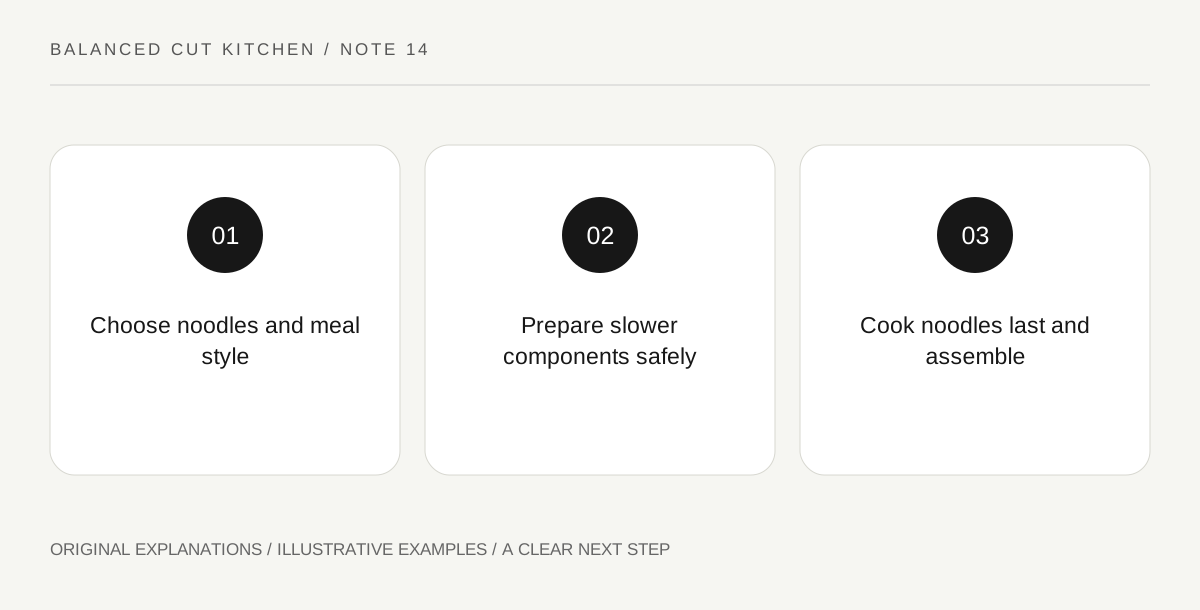
Original explanatory diagram. Read the full method and limitations below.
Choose noodles for the dish and your needs
Read the package method and identify the ingredient, cooking time and whether the product is dried, fresh or ready-prepared. Wheat, rice, buckwheat blends and other noodles are not interchangeable for allergies or texture. A product name such as soba may still include wheat. Whole-grain options can be useful where they fit the dish, but no noodle needs to imitate a vegetable to be allowed at dinner. Choose an amount that works with the full meal and your personal needs. Keep the package directions visible rather than applying one timing rule to every noodle type.
Prepare other components before the final noodle stage
Cut vegetables consistently and arrange an appropriate protein food using a safe suitable method. A quick-cooking noodle can become soft while you are still chopping a carrot or searching for a sauce. Plan the longest component first and the fastest last. If raw meat, poultry, seafood or eggs are involved, follow relevant safe-temperature guidance rather than judging by the noodle texture. Ready-cooked ingredients can simplify a rushed meal when handled and reheated appropriately. Keep raw-food utensils separate. The goal is a coordinated sequence that respects each ingredient, not making every component finish in one pan regardless of its needs.
Use broth or sauce with a clear purpose
Decide whether the meal is a broth bowl or a drier dressed noodle dish. A small amount of sauce cannot be expected to season a large watery pan, while a broth should not be reduced until it becomes an overly concentrated condiment. Taste and adjust carefully, considering sodium already present in stock, noodles and prepared sauces. Add vegetables and protein in a way that preserves their chosen texture. Avoid filling the bowl with broth merely to make a small amount of food look larger. Liquid contributes to the eating experience but does not automatically supply the substance intended for a main meal.
Serve a flexible amount and learn from the result
If you remain hungry, consider whether the meal needs more noodles, protein food or another component rather than assuming hunger proves discipline. Weight-management goals should not require an unpleasantly inadequate dinner. Keep leftovers under appropriate storage and reheating guidance, recognizing that noodles may soften even when safely stored. Record the useful sequence, such as vegetables ready before noodles, rather than only the brand name. A reliable hot noodle meal can be part of balanced eating without a universal low-carb rule, a tiny bowl requirement or a guaranteed outcome from changing noodle ingredients.
For a shared table, serve noodles, vegetables and the protein component in a way that allows people to choose an appropriate amount while maintaining food safety. Different appetites do not require different moral labels. Keep the ingredients identifiable for allergies, and do not assume a communal sauce is suitable for everyone simply because it was used lightly.
An illustrative timing plan
Lee cooks the slower vegetable and an appropriate protein component before the final noodle stage. He follows the noodle package, chooses a broth-style finish and tastes the combined dish before adding more salty seasoning. He serves enough food for his needs. The method preserves noodles as an ordinary enjoyable part of dinner.
Practical checks
Optional checkboxes save only in this browser.
Questions that come up
Must noodles be replaced with vegetables for weight management?
No universal rule requires that. Consider the full eating pattern, personal needs and an approach you can sustain.
Does soba always mean gluten-free?
No. Some products contain wheat. Read the actual ingredients and allergen information.
References and scope
These sources support the factual background. Examples and exercises are original illustrative teaching material. References do not imply endorsement.
- USDA: Make Half Your Grains Whole Grains — Whole-grain selection and varied grain choices.
- USDA MyPlate: Protein Foods Group — Varied protein foods including beans, lentils, eggs, seafood and soy.
- USDA FSIS: Safe Minimum Internal Temperature Chart — Thermometer-based safe cooking and reheating temperatures.