Give frozen vegetables room to lose water before adding sauce
Frozen vegetables can make a balanced dinner practical, but a crowded pan often turns them into a watery mixture. Managing moisture before sauce changes the texture without requiring a special diet product. The method is flexible: choose vegetables you enjoy and pair them with an appropriate protein food and grain or other satisfying base.
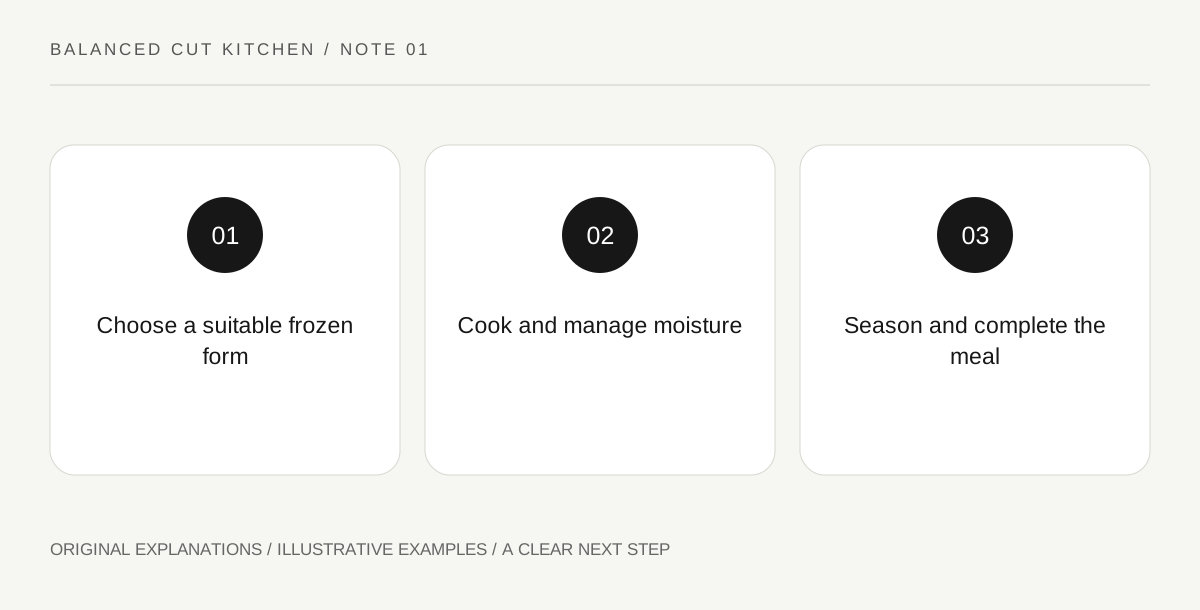
Original explanatory diagram. Read the full method and limitations below.
Choose the vegetable for the intended finish
Read the package cooking directions and identify whether the product is plain or already sauced. Broccoli florets, sliced peppers and leafy greens release and hold water differently, so do not expect one pan result from every bag. USDA includes frozen vegetables among useful vegetable options, and its cooking resources show plain frozen mixes as adaptable ingredients. For a browned or lightly roasted finish, choose pieces that can be spread out and follow an appropriate recipe or package method. A frozen spinach block is better suited to a dish where moisture can be drained or incorporated than to imitating crisp fresh leaves.
Separate cooking from sauce building
Cook the vegetables according to directions before deciding how much liquid the dish needs. In a skillet, a crowded layer can hold steam; using an appropriately sized pan or cooking in smaller batches may make the texture easier to control. In an oven, follow the package or tested recipe and avoid piling everything in one mound. Do not assume extra oil compensates for trapped water. Watch the actual result rather than following a fixed timer meant for a different mix. Some vegetables are pleasant when steamed, so the goal is the texture you want, not browning every ingredient at any cost.
Add flavor where it will remain noticeable
Once excess water is managed, add a suitable sauce, herbs, spices or an acidic finishing ingredient to taste. Begin with a modest amount, combine and reassess. A sauce added too early may become diluted and invite repeated additions. Keep allergy and dietary needs visible in prepared sauces. If using a salty sauce, consider what salt is already present in the vegetables or other ingredients. The culinary aim is a coherent flavor, not a rule that every meal must be oil-free or sauce-free. A small amount of a sauce you enjoy can help make a vegetable component worth repeating.
Finish a meal rather than a vegetable challenge
Pair the vegetables with suitable foods you already know how to prepare, such as beans and a whole-grain bread or an appropriately cooked protein and grain. The quantities depend on your appetite and needs; a large vegetable pile does not automatically replace the rest of dinner. Keep raw animal foods separate during preparation and follow safe cooking guidance when included. If keeping leftovers, refrigerate promptly and follow appropriate storage and reheating advice. Review the meal by texture, flavor and practicality. Frozen vegetables succeed when they fit a real cooking method, not when they earn a moral advantage over fresh produce.
Try changing the vegetable mix only after the method is familiar. A bag dominated by leafy greens may behave differently from florets, so preserve the package instructions and reassess moisture instead of copying the previous sauce amount automatically. That small observation is enough to make the next dinner more predictable.
An illustrative skillet dinner
Sam cooks a plain frozen pepper-and-broccoli mix according to its directions in a pan large enough for the batch. He waits until excess liquid is managed before adding a little preferred sauce. He serves it with prepared beans and a whole-grain side. The example teaches sequencing, not a fixed calorie prescription or promised weight change.
Practical checks
Optional checkboxes save only in this browser.
Questions that come up
Are frozen vegetables automatically inferior to fresh?
No. They are a useful food form. Choose a product and method that fit your budget, access and intended dish.
Should I add more sauce when the pan is watery?
First assess excess liquid and cooking method. More sauce may simply become diluted. Adjust flavor after the texture is under control.
References and scope
These sources support the factual background. Examples and exercises are original illustrative teaching material. References do not imply endorsement.
- USDA MyPlate: Vegetable Group — Vegetable variety and use of fresh, frozen and canned forms in a balanced pattern.
- USDA: Seasoned Roasted Vegetables Video Transcript — Using plain frozen vegetables as a flexible cooking ingredient.