A bean patty needs moisture control before it needs more flour
A bean patty that collapses may be too wet, too smooth or insufficiently rested rather than short of another large spoonful of flour. Understanding structure makes it easier to adapt a mixture. The goal is a pleasant meal component, without treating homemade patties as automatically lighter or more nutritious than every alternative.
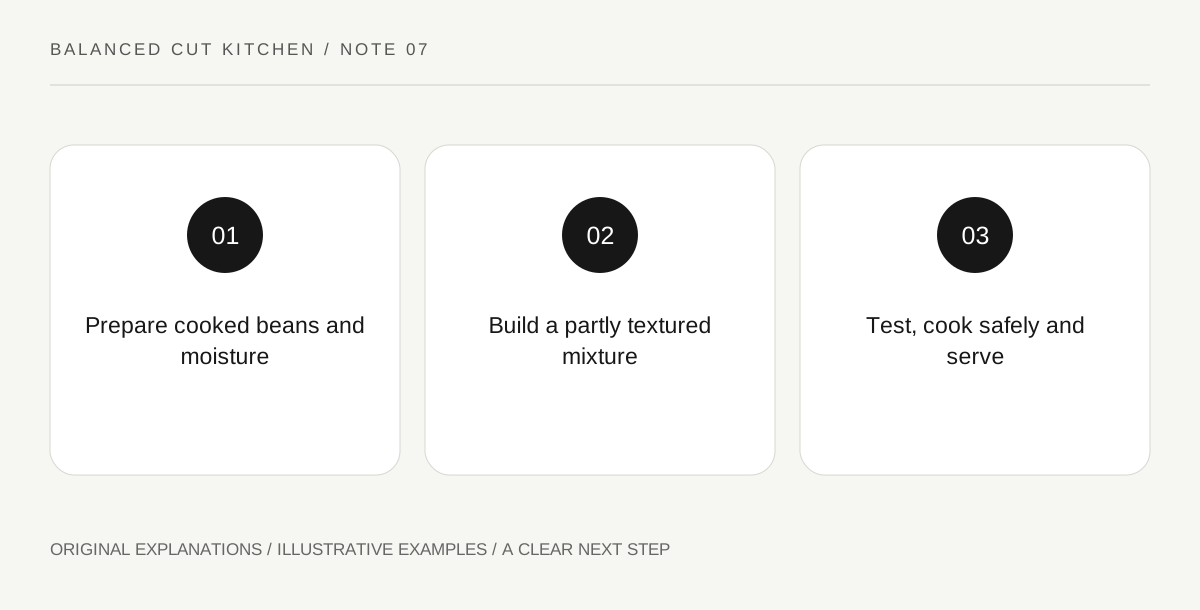
Original explanatory diagram. Read the full method and limitations below.
Start with appropriately prepared beans
Use fully cooked beans prepared according to directions. Drain a canned or ready-cooked product as appropriate for the recipe and note how much moisture remains. Do not use raw dried beans in a quick patty mixture. USDA includes beans among protein foods, but the amount and other ingredients determine their role in the meal. Choose a bean whose flavor you enjoy and keep the product label available when sodium or allergens matter. A very wet base can make later adjustments difficult, so deal with obvious liquid before mashing. This is a texture decision, not a claim that rinsing removes every nutrient or additive.
Mash some structure into the mixture
A partly mashed mixture can combine a binding base with recognizable pieces. A completely smooth puree may behave differently and can need a tested recipe suited to that texture. If adding chopped vegetables, consider whether they release water and whether they should be cooked and cooled appropriately first. Add seasonings in a way that keeps the mixture manageable. Avoid adding a large amount of dry binder immediately; it can turn a flavorful patty into a dense flour-heavy cake. Use a suitable recipe as the starting point, then assess which component changed when you make an adaptation.
Shape and test a small portion
Follow the recipe's resting and shaping instructions, since a mixture may become easier to handle after the dry ingredients hydrate. Keep food safely refrigerated when needed during a rest. Cook a small test portion by the chosen suitable method before shaping the entire batch. If it falls apart, consider moisture, size and handling before adding more binder. Raw egg or other animal ingredients change the safety requirements, so use appropriate cooking guidance and a thermometer when relevant. A browned outside does not guarantee a safely cooked center. Keep utensils and surfaces clean throughout the process.
Serve the patty as part of dinner
Choose a bun, grain or other substantial accompaniment and vegetables that suit your needs. Keep sauces and toppings deliberate rather than assuming a bean patty creates a nutritionally complete meal by itself. A soft patty may be more enjoyable served on a plate than forced into a tall sandwich that falls apart. If the mixture does not hold despite appropriate adjustment, use it in another suitable cooked format rather than continuing to add flour indefinitely. Store leftovers safely. The successful skill is recognizing the structure problem and producing a meal you enjoy, not achieving an identical burger shape at any cost.
Patty size affects handling as well as cooking. A very large thin patty may break when turned even if the mixture is appropriate, while a thick one can require a different method. Follow the starting recipe and test the chosen shape before deciding that the ingredient proportions are wrong.
An illustrative test patty
Jamie drains cooked beans, partly mashes them and follows a suitable patty recipe. The first small patty is too loose, so she checks remaining moisture and resting time before adding a modest binder adjustment. She cooks safely and serves it with vegetables and a substantial side. The test prevents a whole tray of the same problem.
Practical checks
Optional checkboxes save only in this browser.
Questions that come up
Can raw dried beans cook inside a quick patty?
Do not assume so. Start with fully cooked beans and follow safe preparation instructions for the actual ingredient.
Does more flour always solve crumbling?
No. Moisture, texture, size and handling can be the issue. Use a suitable recipe and adjust one factor at a time.
References and scope
These sources support the factual background. Examples and exercises are original illustrative teaching material. References do not imply endorsement.
- USDA MyPlate: Protein Foods Group — Varied protein foods including beans, lentils, eggs, seafood and soy.
- USDA FSIS: Safe Minimum Internal Temperature Chart — Thermometer-based safe cooking and reheating temperatures.