Cook cabbage in stages so a quick skillet stays lively
Cabbage can be crisp, tender or watery depending on cut size, pan load and cooking order. A staged skillet makes it easier to use a large vegetable without ending with a soft pile. The meal still needs appropriate substance and seasoning; cabbage is a useful ingredient, not a shortcut around adequate food.
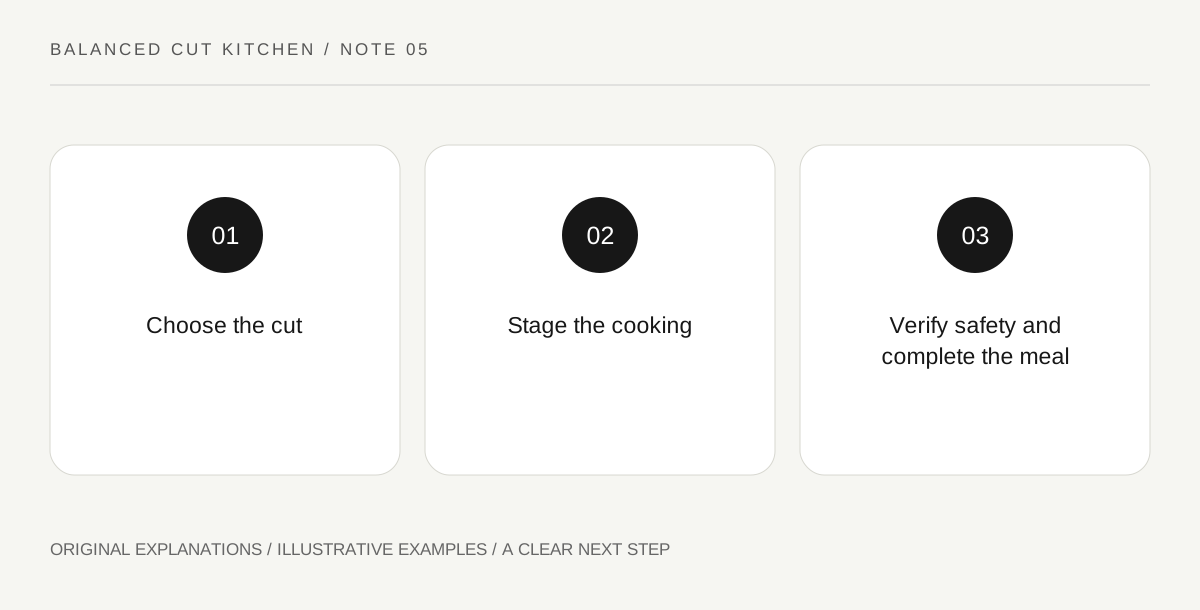
Original explanatory diagram. Read the full method and limitations below.
Cut for one intended texture
Choose whether you want thin ribbons that soften quickly or larger pieces with more bite. Mixing very thick core pieces with fine leaves can make the pan finish unevenly. Wash and prepare produce appropriately, trim as needed and use a stable board and suitable knife. A whole cabbage may be economical, but buy a size you can use and store safely. USDA includes varied vegetable forms in a balanced pattern. The culinary value here is adaptability: the same cabbage can serve a quick skillet without requiring a specialty low-carb substitute or pretending it behaves exactly like noodles.
Give dense ingredients a head start
If the dish includes carrots, onions or other ingredients needing longer cooking, prepare them first using a suitable method. Add cabbage when the pan and earlier ingredients are ready for its shorter stage. Avoid putting a large cold pile into a small pan and expecting every piece to brown. Cook in manageable batches or choose a softer steamed finish deliberately. Stir according to the method and watch texture rather than relying on a time copied from a different pan. A lid can help soften vegetables, but it also traps moisture; use it for a purpose rather than leaving it on automatically.
Cook protein foods under their own safety needs
Beans or another ready-to-use protein can be added at an appropriate point, while raw animal foods require their own safe cooking method. USDA's safe-temperature guidance uses a food thermometer for relevant foods; a cabbage's tenderness does not show whether meat, poultry or eggs are safely cooked. When a quick skillet is intended, a separately prepared protein may make timing easier. Keep raw-food utensils and surfaces separate from ready-to-eat components. This guide does not supply a universal minute-by-minute mixed-pan recipe, because ingredient size, starting temperature and equipment affect both cooking and safe verification.
Finish with contrast and a sufficient base
Add suitable seasoning once you can judge the liquid in the pan. An acidic finish, herbs or a modest amount of a preferred sauce may make the cabbage more appealing, but check allergens and sodium in prepared products. Serve with an appropriate grain, bread or other base if that fits your needs. Do not assume that removing the base makes the meal better for every person. If the skillet becomes an unsatisfying low-energy dinner, revise the meal rather than praising its restraint. A repeatable method should leave room for appetite, cultural preferences and professional dietary instructions.
Save part of a cabbage only under appropriate storage conditions and give it a specific next use. A different cut can change the second dish: a portion used in thin ribbons today need not dictate the same texture tomorrow. This supports variety without buying another large vegetable solely because the first meal feels repetitive.
An illustrative staged pan
Milo wants cabbage with a little bite. He cuts consistent ribbons, gives sliced carrots a head start and adds cabbage in a manageable batch. He uses an appropriately prepared protein food and serves a grain alongside. He seasons after checking the pan's moisture rather than flooding the vegetables early.
Practical checks
Optional checkboxes save only in this browser.
Questions that come up
Can cabbage replace every grain serving?
It is a vegetable with different roles and texture. You can enjoy it without requiring it to replace grains or other substantial foods.
Does tender cabbage prove a mixed skillet is safely cooked?
No. Relevant raw animal foods need their own safe cooking verification, including thermometer guidance where appropriate.
References and scope
These sources support the factual background. Examples and exercises are original illustrative teaching material. References do not imply endorsement.
- USDA MyPlate: Vegetable Group — Vegetable variety and use of fresh, frozen and canned forms in a balanced pattern.
- USDA FSIS: Safe Minimum Internal Temperature Chart — Thermometer-based safe cooking and reheating temperatures.