Build tomato-sauce body with vegetables before reaching for a thickener
A tomato sauce can feel thin because its vegetables are watery or because the serving needs more texture. Cooking and blending decisions can solve different problems. This method builds a flexible vegetable sauce for meals, without claiming that removing cream or adding a vegetable automatically makes the whole dish suitable for weight loss.
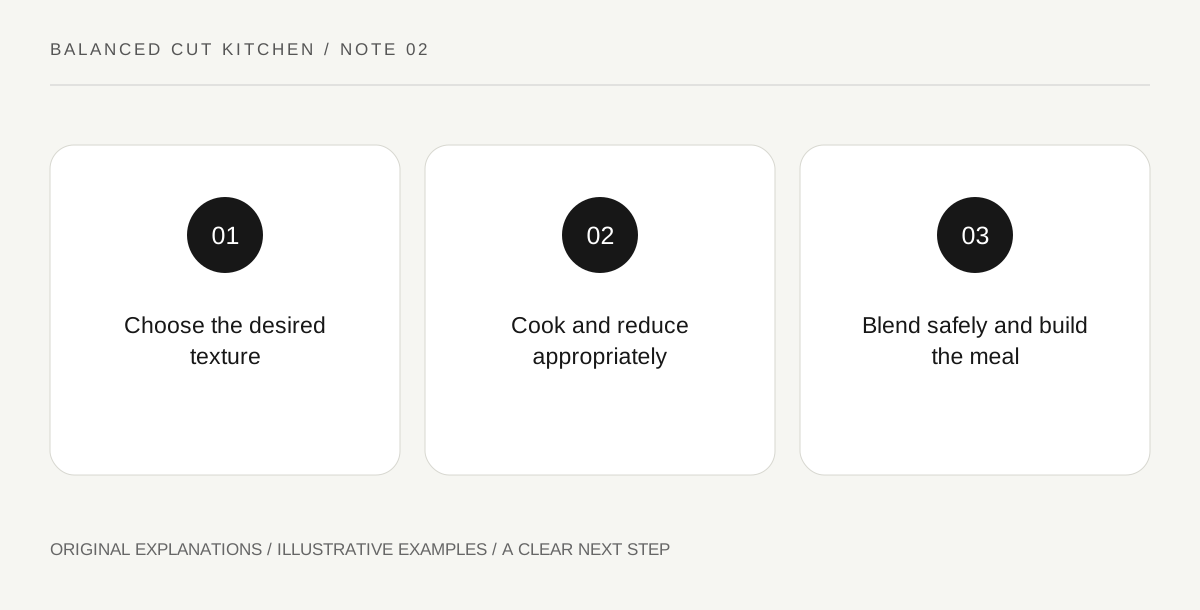
Original explanatory diagram. Read the full method and limitations below.
Decide whether you want smoothness or pieces
A silky sauce and a chunky sauce need different handling. Choose tomatoes, onions, carrots or peppers according to the finish you want and the cooking time available. Wash produce appropriately and keep clean preparation separate from raw meat handling. USDA supports varied vegetable choices, but the exact mixture here is an original culinary framework. For a smooth sauce, plan safe blending according to the appliance's hot-liquid instructions. For a chunky version, cut pieces small enough to cook comfortably and remain pleasant in the finished dish. Do not hide every vegetable if you enjoy visible texture.
Cook off avoidable water
Use an appropriate pan and gently cook the vegetables and tomatoes following a suitable recipe until the texture is ready for the next step. If the sauce is thin, an uncovered simmer can allow water to evaporate, but watch for scorching and stir as needed. Time depends on the tomato product, pan and batch size, so a universal five-minute promise is unhelpful. Taste before adding more salt, particularly with canned products or stock. A sauce can become more concentrated as water leaves, which changes flavor as well as thickness. Do not leave the pan unattended while waiting for a visual transformation.
Use blending or texture deliberately
Blend part or all of the sauce only if that serves the dish and your appliance permits it safely. Never seal very hot liquid in a blender not designed for it. A partially blended sauce can gain body while retaining some pieces. Alternatively, a small amount of appropriately prepared beans can change texture and add a different food role, but it also changes flavor and should not be treated as an invisible universal substitute. Add ingredients gradually and taste. The goal is a sauce you want to eat, rather than forcing every recipe into one texture or making unsupported claims about a single ingredient.
Choose the meal around the sauce
Serve the sauce with a suitable grain or pasta and an appropriate protein food, or use it over roasted vegetables with a substantial side. Do not assume a vegetable-rich sauce alone makes a complete meal. Consider portion, the rest of the plate and your dietary instructions. If adding raw meat or poultry, use an appropriate recipe and verify safe cooking with a thermometer; sauce color does not prove the protein is cooked. Store and reheat leftovers safely. Record the useful culinary adjustment, such as blending half the batch, so the next version is repeatable without turning dinner into a precise laboratory exercise.
For a sauce served over a grain, check the texture on a spoonful of the actual finished meal. A sauce that seems thick in the pan may spread differently over pasta or rice. Test before adjusting the whole batch, and remember that reducing liquid also concentrates existing seasoning.
An illustrative sauce adjustment
Alex makes a tomato-pepper sauce that tastes good but runs off pasta. She lets excess water reduce while stirring, then safely blends part of the batch according to her appliance instructions. She serves it with a suitable protein food and vegetables. She records the partial-blend method rather than assuming the sauce needs more salt or a commercial thickener.
Practical checks
Optional checkboxes save only in this browser.
Questions that come up
Does adding vegetables make any sauce low-calorie?
No single ingredient determines the whole meal. Recipe amounts, other ingredients and the amount eaten all matter.
Can I blend hot sauce in any sealed blender?
No. Follow the appliance's hot-liquid instructions. Some sealed personal blenders are unsuitable for hot contents.
References and scope
These sources support the factual background. Examples and exercises are original illustrative teaching material. References do not imply endorsement.
- USDA MyPlate: Vegetable Group — Vegetable variety and use of fresh, frozen and canned forms in a balanced pattern.
- FDA: Selecting and Serving Produce Safely — Produce washing and safe preparation.