Complete a takeout meal with a useful home addition
Takeout can be part of an ordinary eating routine, especially on a demanding day. The useful question is what would make the meal work better for you at home. A simple addition may improve variety or substance without requiring a second dinner, moral labels or an exact nutrient calculation that the available information cannot support.
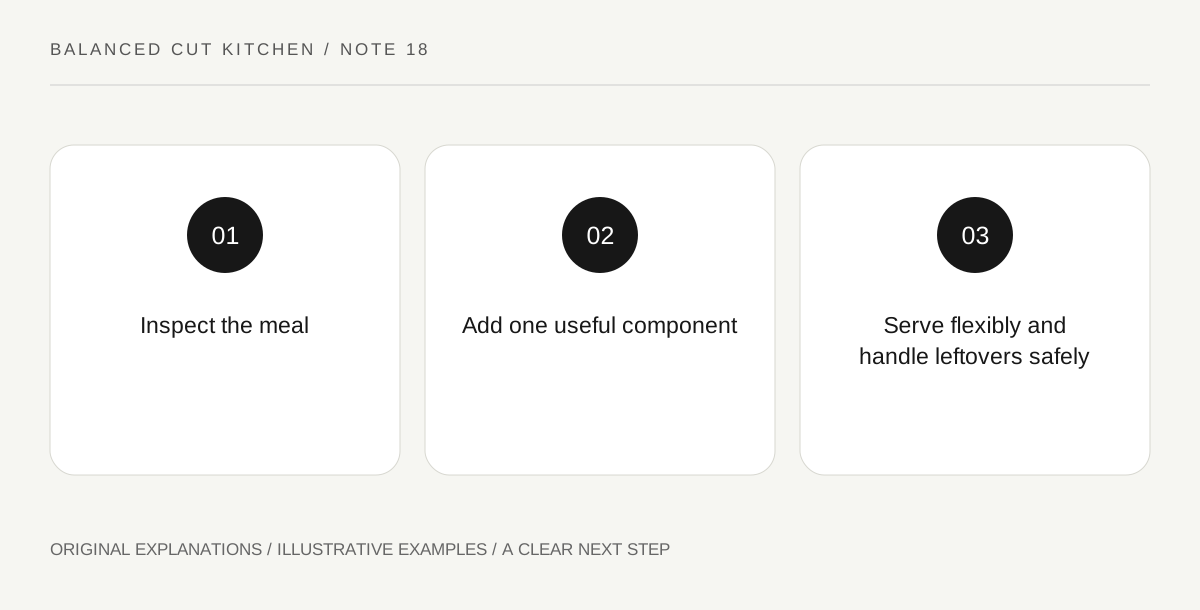
Original explanatory diagram. Read the full method and limitations below.
Assess the order you actually have
Look at the main food, sauces, vegetables and any sides rather than assuming every takeout meal has the same pattern. A rice dish with little protein presents a different question from a substantial main with few vegetables. CDC encourages practical healthier meal choices at home and away. Use that as a prompt to inspect, not to declare a cuisine inherently healthy or unhealthy. If nutrition information is available, read its stated portion and limitations. Do not invent precise calories from a photograph or assume a restaurant portion is the amount your body needs at one sitting.
Choose one addition that fills a role
A ready-to-eat vegetable, suitable fruit, beans, a grain or another appropriate food may complete the meal depending on what is missing. Keep the addition simple enough to happen on the day you ordered takeout. A vegetable side that requires forty minutes of preparation is unlikely to serve a tired evening. Choose food you enjoy and can safely prepare. Adding a side is not a punishment for ordering convenience food. It should make the actual meal more useful, whether through variety, texture or adequate substance, rather than increasing the number of separate dishes because a checklist demands it.
Keep sauces and shared portions deliberate
Serve the food in a way that makes components visible and lets you choose amounts that fit your needs. A sauce on the side can offer flexibility where the restaurant provides that option, but it is not automatically required. Consider sodium and allergens across the order and additions. If sharing, communicate dietary needs and avoid cross-contact rather than assuming everyone can eat from the same container. Keep personal appetite separate from a rule that the box must be emptied or divided into a fixed number of meals. A package is a transport unit, not a nutritional instruction.
Handle the meal's timeline safely
Know when the food arrived and refrigerate perishable leftovers promptly under current guidance. Do not leave the order out for the entire evening while different household members eat at different times. Reheat leftovers appropriately and follow USDA's 165°F or 74°C guidance where applicable. The storage clock does not reset when food is moved into a new container or mixed with a home ingredient. If the meal's history is unsafe or uncertain, do not rely on smell to approve it. A practical takeout routine combines useful food choices with reliable handling and a realistic plan for whatever remains.
Keep the home addition familiar enough that it can be prepared while the order is arriving. If it consistently remains uneaten, review flavor and timing rather than buying more of the same side out of obligation. A useful complement is food people actually want to eat, not a symbolic item added to make the order look virtuous.
An illustrative late workday
After a late shift, Jo orders a familiar main dish and notices it has little vegetable variety. She adds a simple prepared vegetable side at home, serves an amount that fits her needs and refrigerates remaining perishable food promptly. The home addition completes the occasion without turning takeout into a dietary failure.
Practical checks
Optional checkboxes save only in this browser.
Questions that come up
Must takeout be avoided completely?
A realistic routine can include convenience meals. Consider the actual foods, personal needs and overall pattern rather than an absolute rule.
Can I estimate exact nutrients from the box size?
No. Portion composition and recipes vary. Use reliable information when available and keep estimates appropriately limited.
References and scope
These sources support the factual background. Examples and exercises are original illustrative teaching material. References do not imply endorsement.
- CDC: How to Have Healthier Meals and Snacks — Practical meal choices at home and when eating away.
- USDA FSIS: Leftovers and Food Safety — Prompt refrigeration, safe leftover storage and reheating.