Increase food fiber through manageable meal changes rather than one huge bowl
Trying to add beans, bran and raw vegetables everywhere at once can make a new eating pattern unpleasant and difficult to interpret. A gradual food-based approach is easier to adjust. Fiber needs and tolerance vary, especially with medical conditions, so this guide offers meal-design ideas rather than a treatment for digestive symptoms.
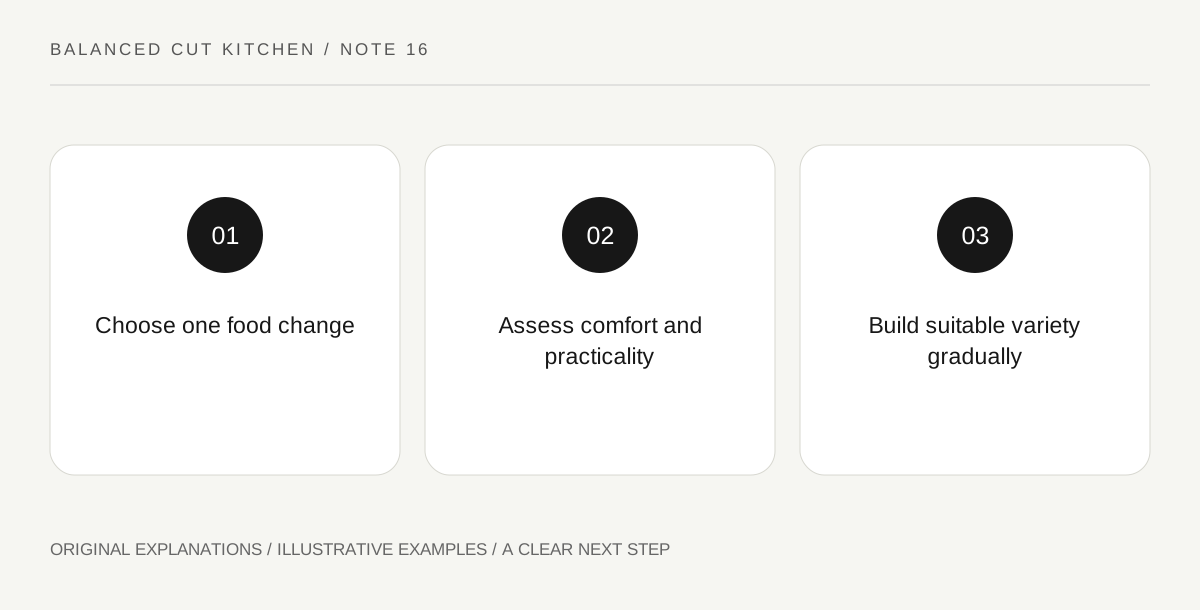
Original explanatory diagram. Read the full method and limitations below.
Choose one familiar meal to change
Start with a meal you already eat regularly and identify a realistic food change. That might be an appropriate whole-grain bread, a bean component or an additional vegetable. NIDDK describes food sources of fiber and advises gradual increases so the body can adjust. Do not treat the highest possible fiber number as the goal for every plate. If you have a diagnosed digestive condition, restrictions or persistent symptoms, ask your clinician or dietitian what is suitable. A general recommendation to eat more fiber does not override an individualized plan or establish the cause of abdominal discomfort.
Make the change recognizable and enjoyable
Choose a food you like and can prepare, rather than an unfamiliar product bought only for a large front-label fiber claim. A whole-grain version may need a different cooking time or more attention to texture. Beans should be properly cooked and included in a dish with a clear role. A small amount added to a familiar meal may be easier to evaluate than replacing every staple in one week. Keep flavor, cost and access in the decision. A theoretically impressive plan that leaves food uneaten does not support a consistent eating pattern, and no single ingredient needs to carry every nutritional goal.
Observe comfort without diagnosing from one meal
Notice how the change fits the day and whether it creates persistent discomfort. Keep the amount and other changes in mind rather than blaming one ingredient after a complicated meal. NIDDK also discusses fluids in relation to fiber, but individual fluid needs can vary; follow professional restrictions when applicable. Do not add large amounts of a supplement as a substitute for asking about ongoing symptoms. If pain, bleeding or another concerning symptom occurs, seek appropriate care. This is a meal adjustment, not a home test designed to prove that a particular food is healthy or unhealthy for every person.
Build variety at a manageable pace
Once a change is practical and comfortable, consider another appropriate food role elsewhere in the eating pattern. Fiber can come from several foods, so a routine need not depend on one enormous salad or the same bran cereal daily. Rotate options that fit your preferences and household. Keep meal adequacy in view: adding fibrous vegetables does not require removing all grains, protein foods or fats. Review what was feasible and preserve it through busy days. The useful outcome is a varied pattern you can maintain, not a rapid transformation, a guaranteed digestive result or a competition to consume the most fiber.
Consider preparation burden alongside tolerance. A whole grain that takes much longer than your usual staple may need a different day or an appropriate convenient form. Choosing an accessible version can preserve the intended food change without making the meal so difficult that the routine collapses at the first busy evening.
An illustrative gradual change
Rae keeps a familiar lunch but chooses an appropriate whole-grain bread and learns its texture. She does not simultaneously add bran, a large bean portion and several unfamiliar vegetables. After finding a comfortable routine, she considers a second change with relevant professional advice. Persistent symptoms remain a reason to seek care.
Practical checks
Optional checkboxes save only in this browser.
Questions that come up
Is more fiber always better immediately?
No. Gradual changes and individual needs matter. Ask a professional when symptoms or medical conditions affect what is appropriate.
Can one huge salad replace all other fiber foods?
A varied eating pattern offers different foods and roles. A large raw salad is not a universal requirement or a substitute for an adequate meal.
References and scope
These sources support the factual background. Examples and exercises are original illustrative teaching material. References do not imply endorsement.
- NIDDK: Eating, Diet and Nutrition for Constipation — Food fiber sources and gradual dietary fiber changes rather than abrupt escalation.