If a planned dinner leaves you hungry, revise the meal instead of blaming appetite
A meal can look disciplined and still be too small or poorly balanced for the person eating it. Hunger after a deliberately sparse dinner is useful information. A realistic weight-management approach can examine ingredients, timing and satisfaction without turning food into a reward for enduring discomfort or promising a particular rate of loss.
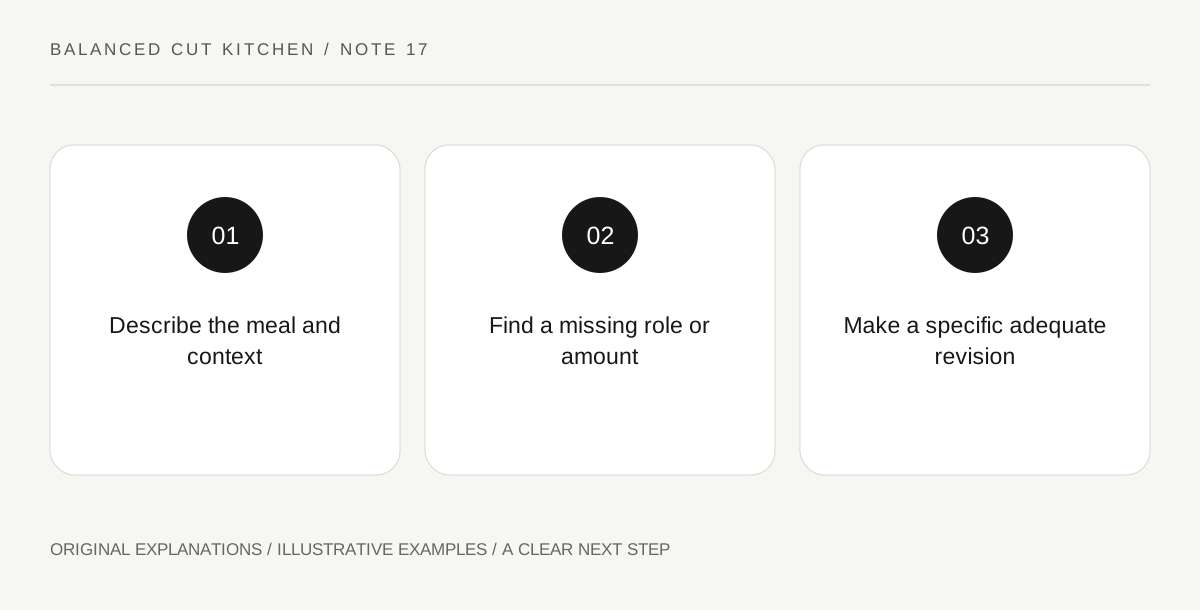
Original explanatory diagram. Read the full method and limitations below.
Describe the meal as it was eaten
Write the actual ingredients and approximate amounts, including beverages, sauces and sides. A photo may show volume while missing what provides substance. A bowl mostly filled with leaves has a different role from one containing grain, beans and a suitable dressing. Keep the description neutral rather than calling the meal good or bad. NIDDK emphasizes realistic, individualized approaches to weight management. This guide cannot determine your calorie needs from a dinner description. If a professional has provided a plan, explain the hunger and practical difficulty to them rather than silently restricting more or abandoning the entire plan.
Identify the missing food role
Ask whether the meal included an appropriate protein food, grain or other substantial component, vegetables and enough overall food for the occasion. This is a prompt to inspect the structure, not a universal plate formula or a command to add every group at every meal. A soup or salad may have been designed as a side dish. A tiny garnish of beans or cheese may not serve the role you imagined. Consider a suitable addition that preserves the dish's appeal, such as bread with soup or a clear protein component in a salad. Avoid treating vegetables as a limitless replacement for all other ingredients.
Consider timing and the rest of the day
A long gap, skipped earlier food, demanding activity or a rushed meal can affect the experience. Describe those circumstances without using them to self-diagnose a metabolic problem. If hunger is persistent, extreme or accompanied by concerning symptoms, seek appropriate professional advice. Do not compensate by promising to eat nothing the next day or by adding unverified appetite-suppressing products. A practical adjustment may be a more substantial dinner or a planned snack, depending on needs. The goal is a workable eating pattern across ordinary days, not proving that you can ignore signals while following a visually impressive menu.
Test a specific revision and keep it flexible
Choose one change for the next comparable meal and observe whether it is more satisfying and manageable. Keep enough food available rather than treating the planned portion as an unbreakable limit. If the revision helps, record the ingredient role rather than an exact universal rule. Another person may need a different amount. Review weight-related goals with a qualified professional when appropriate, particularly with medical conditions, pregnancy or a history of disordered eating. No single dinner establishes success or failure. A sustainable routine allows adjustment when the original plan does not fit the person who has to live with it.
If you are uncertain how much to add, ask a qualified dietitian to help connect meals with your needs and goals. Bring the actual meal pattern, appetite experience and relevant health information. A useful consultation can work from ordinary foods rather than requiring a special branded menu or promising that a precise dinner arrangement works for everyone.
An illustrative soup revision
Ari's planned dinner is a light vegetable soup and a few crackers, leaving him hungry soon afterward. He recognizes that the soup recipe was a starter and plans a suitable protein component and more substantial side next time. He discusses ongoing needs with a dietitian rather than treating hunger as evidence that he must be stricter.
Practical checks
Optional checkboxes save only in this browser.
Questions that come up
Does hunger mean a plan is working?
It is not proof of a healthy or effective plan. Persistent inadequacy should prompt review rather than praise for tolerating it.
Should I copy another person's dinner amount?
Their needs may differ. Consider your circumstances and seek individualized guidance when needed.
References and scope
These sources support the factual background. Examples and exercises are original illustrative teaching material. References do not imply endorsement.
- NIDDK: Choosing a Safe and Successful Weight-Loss Program — Realistic individual approaches and avoiding unsupported outcome promises.