Taste sauce in a measured sequence instead of pouring until dinner feels finished
A sauce can make a balanced meal more enjoyable, but repeated unmeasured additions can obscure why the dish tastes flat or salty. A small tasting sequence helps distinguish moisture, acidity, aroma and seasoning. The purpose is flavor control, not a rule that sauce must be banned or every meal must taste restrained.
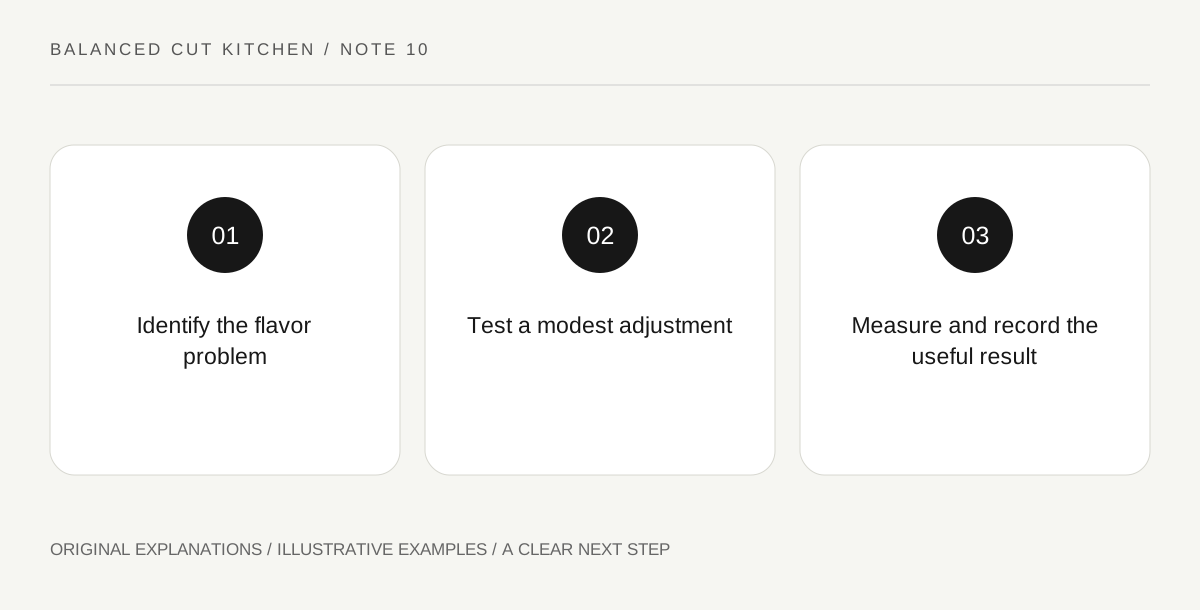
Original explanatory diagram. Read the full method and limitations below.
Ask what the dish is missing
A dry mixture may need moisture, a rich dish may need acidity and a bland grain may need aromatic seasoning. Those are not the same problem. Taste the actual food before reaching for a familiar bottle. Consider which ingredients already contain salt or sweetness. FDA's sodium guidance encourages looking across packaged foods rather than judging one addition alone. A prepared sauce can fit a meal, but its label and your needs matter. Avoid assuming a low-fat or sugar-free front claim answers every nutritional question. The full formula and amount used are more informative than one marketing term.
Test a small portion first
Put a little of the meal in a separate tasting dish and try a modest sauce adjustment there. This avoids changing the whole pan before you know whether the idea works. Use a clean utensil and do not return a used tasting spoon to food intended for others. A small trial can reveal that a squeeze of an appropriate acidic ingredient is enough, or that a different texture is needed. Keep allergy considerations explicit when testing condiments. A sauce containing sesame, milk, wheat or soy is not an invisible detail because it is used in a small quantity.
Measure for repeatability rather than punishment
Using a spoon can help you understand how much creates the flavor you enjoy. It is a cooking tool, not a moral score. If you later want to compare labeled nutrient amounts, the actual amount used makes the calculation clearer. Do not confuse the label serving with a personal portion recommendation. A sauce may be spread, mixed or served on the side, and the useful amount changes with the food. Start modestly, mix well and taste again. Adding more after the first distribution is easier than removing an overly salty or wet sauce from every component.
Keep a short flavor note
Record the ingredient and approximate amount that worked for the dish, along with any important product identity. A note such as 'a small spoon of mustard sauce after the vegetables were drained' is more useful than 'healthy sauce.' Revisit it when products change, since sodium and sweetness can differ across versions. Do not assume a homemade sauce is nutritionally identical every time or inherently superior to every prepared option. The practical goal is a flavorful meal you can repeat, with ingredients and amounts that fit your preferences, budget and any professional dietary guidance.
When a meal includes several sauces, choose a main flavor rather than adding every bottle that seems compatible. A grain bowl can become confusingly sweet, salty and acidic through small additions that accumulate. A clear flavor direction also makes it easier to repeat the dish and understand which ingredient created the result you liked.
An illustrative flavor test
A grain-and-vegetable dinner tastes flat. Avery tests a small portion with a little lemon and a measured amount of a preferred sauce, using a clean spoon. The flavor improves without flooding the pan. Avery notes the sequence for next time and checks the sauce label where relevant to dietary needs.
Practical checks
Optional checkboxes save only in this browser.
Questions that come up
Does sauce need to be removed for weight management?
Not automatically. Consider the whole meal, the ingredients, amount and your personal needs. Enjoyable food can support a realistic routine.
Is the label serving the amount I must use?
No. It is the reference amount for the listed nutrients, not an individualized recommendation. Use it to interpret what you actually add.
References and scope
These sources support the factual background. Examples and exercises are original illustrative teaching material. References do not imply endorsement.
- FDA: How to Understand and Use the Nutrition Facts Label — Serving-size interpretation and comparing labeled nutrient amounts.
- FDA: Sodium in Your Diet — Sodium across ingredients and label-based comparisons.